During an interview four years ago, Jesús Colmenar, the executive director and producer of Money Heist, didn’t think that UHD HDR would be accepted by viewers. What follows is an excerpt from that interview. And I guess “Money Heist” is being prepared for 8K. Migue Amoedo: We are shooting in 7K with an 8K sensor, but as... Continue Reading →
MicroLED Industry Association White Paper: Mass Production Still Years Away
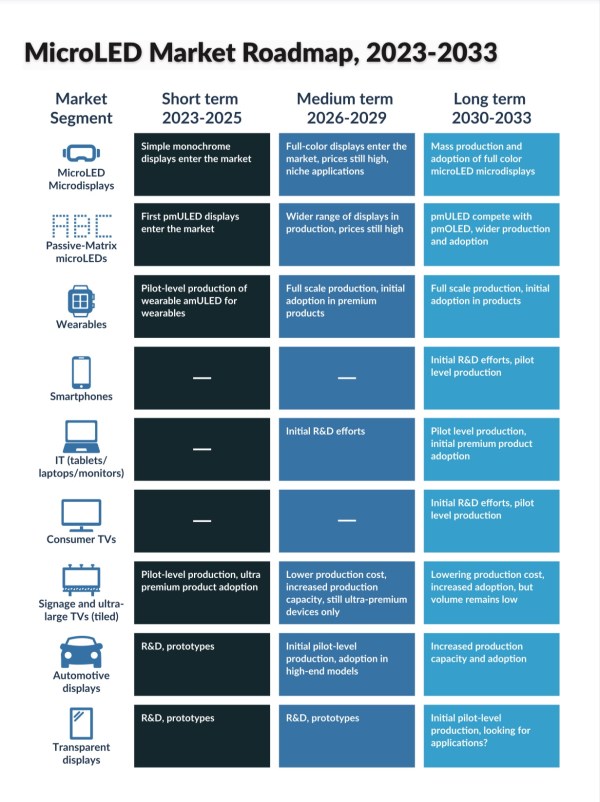
The MicroLED Industry Association (MIA) has published MicroLEDs 2023: State of the industry and future roadmap, a non-member summary of the full document, which paints a bleak picture for those of us who were hoping to snatch a 77” microLED TV before being dispatched to an assisted living residence. MicroLED Market and Industry Landscape Mass... Continue Reading →
Run Calman On Mac: How To Install Fusion 13.5
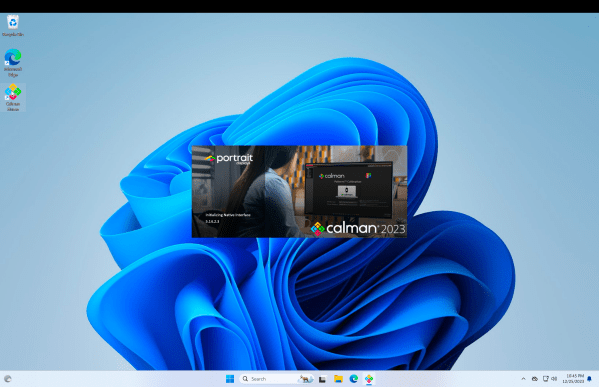
Calman announced back on Oct. 5, 2023, “While there are Apple Silicon specific versions of VMWare Fusion and Parallels, they rely on an ARM-specific build of Windows that lacks comprehensive driver support, impacting several devices Calman interfaces with. At this time Calman must be used on Windows-based PC.” VMWare Fusion 13.5, released just weeks after Calman’s... Continue Reading →
Introducing Fusion 13.5 Pro and Player
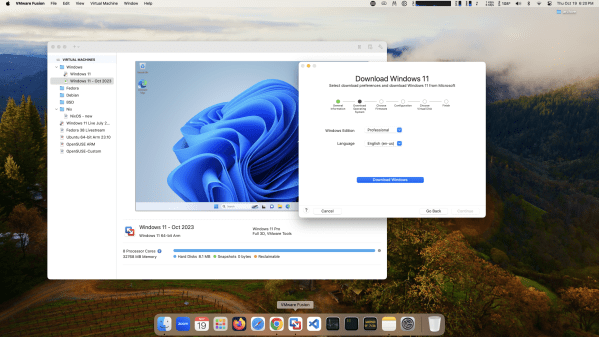
For those who need to run virtual Windows on a Mac, there's been a pretty huge upgrade to VMWare Fusion. Major features include: All new Get Windows Feature for Macs with Apple silicon Download and install Windows 11 on the latest Macs with ease. VMware Tools on Windows 11 for ARM Drag-Drop, Copy-Paste, DirectX 11... Continue Reading →
Pick Up The Sony A95L QD-OLED With No ASBL!
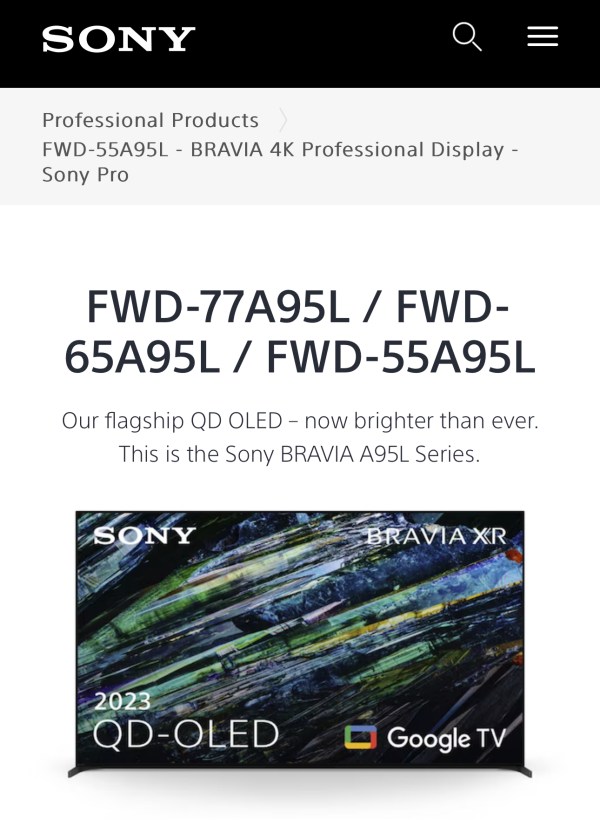
Update 30.05.2024: During a Dolby Vision Technical Webinar, Nate McFarlin refers to a 'new' A95L shown beside the BVM-HX3110 reference mastering monitor at NAB that comes with ASBL disabled out of the box. This must have been the FWD commercial version. Update 18.04.2024: “Sony can provide custom firmware to Hollywood studios to disable panel ABL... Continue Reading →
Calibrate The Sony A95L TV With Calman
https://youtu.be/oYVy_P2_R7o?si=tXr_lrgNmodcUGTi In his review of the Sony A95L, Paolo Centofanti wrote: “Usually, the software calibrates on the native panel range of 2.2, while with a special LUT invisible to the user, the TV adapts the parameters for other gamma values and the different curves of the various HDR modes. The problem we have encountered is that... Continue Reading →
How To Calibrate LG OLED To P3-D65 With Calman
David Abrams, Senior Calman Product Manager at Portrait Displays, explains: “We’ve already set up our system for HDR and we’ve already done BT.2020 but the monitor has a second memory based on its color space flag. So remember, we were talking about the info frame flag that content sends to the display to say, ‘I’m... Continue Reading →
HDR Quiz
It’s that time of year again! 1. The creator of Rec.2020 was a. Colonel Sanders b. Kenichiro Masaoka c. Alexander Graham Bell 2. According to Tony D’Amore, Senior Colorist, Picture Shop, one of the worst practices in the industry is a. putting highlights at 200 nits b. crushing shadows c. shooting with digital cameras 3.... Continue Reading →
Power Budget, Comfort Levels & Graphics White
Understanding the interplay between display limitations, viewer comfort and creative intent is critical for HDR grading. This post examines three pivotal constraints. Power Budget In their most accurate picture modes, flagship OLED TVs like the Sony A95L can reach as much as 265 cd/m² full screen brightness, which most OLED TVs can’t begin to approach;... Continue Reading →
Cinematographer On The Dynamic Use Of ISO
Here’s an excerpt from an interview with cinematographer Powell Robinson published by PostPerspective, focusing on the DP’s dynamic use of ISO with the ARRI Alexa Mini. We found it interesting because over the years, some cinematographers have claimed that shooting at low ISOs on an Alexa hurts dynamic range in the highlights and produces digital-looking,... Continue Reading →
Do QD-OLEDs Use Color Filters?
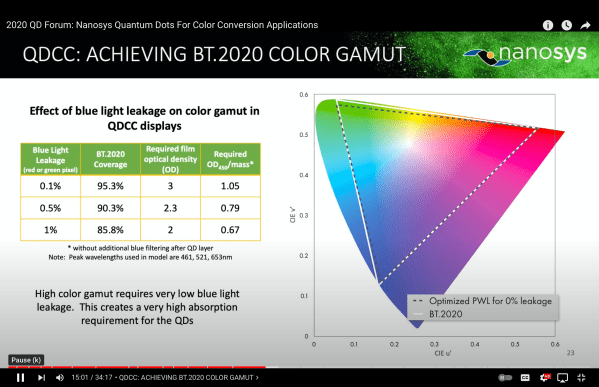
Samsung Display's marketing materials imply that no color filters are used in their QD-OLED displays, which is not 100% true. High color gamut requires very low blue light leakage. As can be seen in the illustrations, without any color filters at all, blue light leakage will occur in the red and green channels, impacting gamut... Continue Reading →
 The Daejeon Chronicles