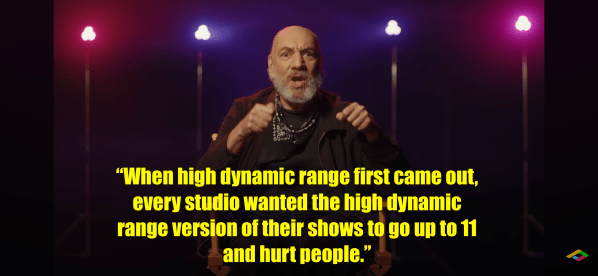
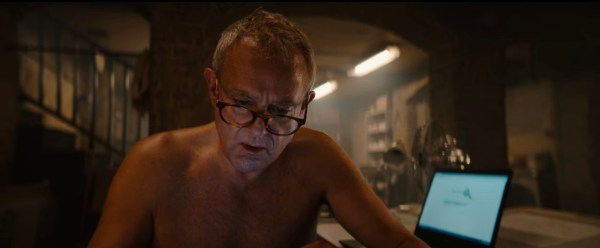
Evolution of Tech & HDR, a segment from the YouTube series ‘Color Masterclass with Joshua Pines and Maxine Gervais’ produced by Portrait Displays, coincided with Netflix’s release of The Brothers Sun, which was graded by Maxine Gervais. Joshua Pines claims that when HDR was in its infancy, all studios endeavored to make the brightest grades... Continue Reading →
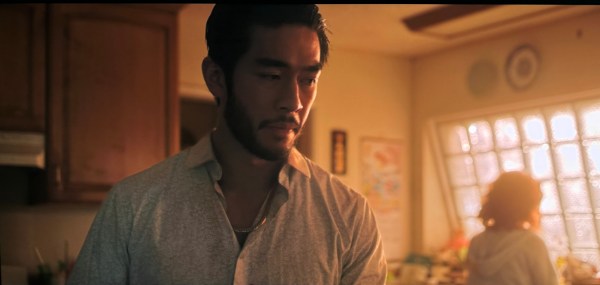
The Brothers Sun: The Worst Cinematography Of 2024?
“I like 20Ks and T12s pounding through windows.” DP C. Kim Miles "The show is one of the first important TV releases of the year 2024 on Netflix after its launch on January 4, 2024. The Brothers Sun received a score of 85% on Rotten Tomatoes..." - The Economic Times After reading interviews with cinematographer C.... Continue Reading →
Create Textural Depth Redux
From time to time, we go back and see if we can't improve upon some of the color grading techniques in the Monster Guide. This is an easier way to create textural depth. During an appearance on Cullen Kelly’s Grade School, the brilliant colorist Jill Bogdanowicz revealed a secret to accentuating texture without it looking... Continue Reading →
High Brightness: The Fly In The Ointment
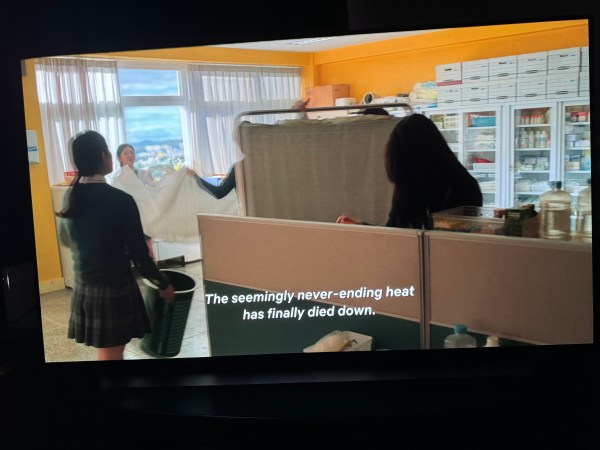
There’s one crucial aspect that researchers who conducted the viewer brightness preference studies we’ve shared overlooked, and that is 24p motion judder. We doubt that participants in the studies would have preferred 4,000 nits over 1,000 nits had they been shown clips of actors walking in front of bright windows, as students do in the... Continue Reading →
Is Shadow Detail Really HDR’s Greatest Advantage?
High Dynamic Range (HDR) has been praised by filmmakers for its shadow detail, but is that truly HDR’s crowning achievement? In this collection of thoughts from colorists, consultants, cinematographers, researchers, industry organizations, studios and manufacturers, we explore whether this obsession with "seeing into the shadows" overlooks HDR’s real potential. The “Shadows” Camp The visual benefit... Continue Reading →
Perceptually Matching Displays In Post Production
https://youtu.be/aQ2jK13-P5U?si=ymgPsB_3_8eRCNIO David Abrams, along with colorist Josh Petok, demonstrates how to correct for observer metamarism. The shots they’re looking at are from “Meridian” (2016), a 4K 60p HDR test video with a peak brightness level of 4,000 nits created for Netflix in partnership with Sony, Dolby and RED Studios. The video includes old, grainy footage... Continue Reading →
Study Finds Substantial Preference For 4,000 Nits Over 1,000 Nits
Subjective Quality Evaluation of High Dynamic Range Video and Display for Future TV by Philippe Hanhart, Touradj Ebrahimi, Pavel Korshunov and Yvonne Thomas. SMPTE Motion Imaging Journal, May 2015 The following excerpts are from a study carried out at the European Broadcasting Union and École Polytechnique Fédérale de Lausanne in 2015. Why 100, 400, 1000 and... Continue Reading →
Dolby Vision Analysis Tuning Feature in Resolve Studio 18.6
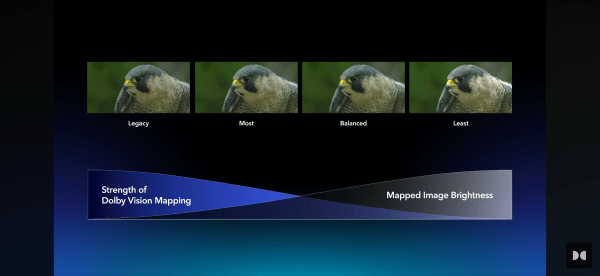
This feature introduces a new and improved analysis algorithm that allows colorists to select the strength of highlight retention and the amount of mapping applied. Users can now choose from a predefined set of spatial filters. Selecting the "Legacy CM4 L1" option matches the analysis of the original CMv4 algorithm. Older projects from software versions... Continue Reading →
Josh Pines and Maxine Gervais Talk HDR
https://youtu.be/jIw0RNIJJX0?si=PCcu-SrozX-hzjHM&t=165 “One of the problems is, they [SDR and HDR] look different, so if you’re doing a movie or episodic, can you simultaneously think about making two things that look different? Usually there’s a vision, there’s a creative intent, that you want preserved across all the things… so what we wound up having to do... Continue Reading →
Canadian Media Engineer Confirms That LG Has Not Rolled Out FW Update To Disable G3 Auto-Dimming Beyond USA
“Hi, my names Rich and I'm a media engineer for Animal Logic in Vancouver, Canada. One of our DI colorists told me about your website and forums [liftgammagain], so I thought I'd share what we've been doing in order to try and turn off the fabled dimming on the LG G3. We got a Canadian... Continue Reading →
Hollywood Colorists: TV Marketing Is Wrong. With HDR The Important Thing Is Not Brightness
Panasonic, which has been partnering with Company3 CEO Stefan Sonnenfeld since 2017, invited reviewers to visit the post-production house to promote their TVs. Paolo Centofanti of the Italian tech website DDay.it writes: "According to the colorists of Company 3, the company responsible for the post-production of 80% of Hollywood series and movies, you don't need... Continue Reading →
How Ads Limit Dynamic Range
At the close of episode 3 of the Korean zombie series All of Us Are Dead, the beam of a helicopter searchlight gradually grows larger as the chopper approaches the high school where undead are feasting on classmates until the entire screen is engulfed by blinding white light, and we were eager to see what... Continue Reading →
YouTuber Makes Preposterous Claims Following Sony’s New MiniLED Event
A popular YouTuber, discussing Sony’s remarkable new 4,000-nit miniLED TV, makes the following outlandish claims: 1. Sony says that OLED isn’t good enough 2. Sony’s 4,000-nit miniLED TV has completely destroyed Korea’s OLED TV industry 3. Sony Pictures could dictate that colorists grade peak highlights to 4,000 nits 4. Netflix and Amazon could charge an... Continue Reading →
Bloom In HDR Grades Often Not A Stylistic Choice
There is one warning: any windows or highlights that are clipped in exposure at shooting stage will likely require softening in the grade and a blur (halation) applied. Clipped exposure in HDR can be quite visually undesirable, so where possible be mindful of it during shooting. It’s probably the only downside of HDR grading/mastering. Thomas... Continue Reading →