Let’s hope this is a sign of things to come. https://youtu.be/_2un1aU7mT0 And some more titles in 4K HDR: https://youtu.be/6HRy9ygjD9M https://youtu.be/bjDaVN2HMbs https://youtu.be/xMeFaxdtGfg https://youtu.be/CSkHnz5a68Q https://youtu.be/439pP_kn76w https://youtu.be/emH_YzWLnc8 https://youtu.be/0tbe7fve1vk https://youtu.be/UG60BDOBAEg https://youtu.be/Rnam_wHwVWE https://youtu.be/4n36ennMDs8 https://youtu.be/3qJEFIVYr_c https://youtu.be/ExCP-ST0W48 https://youtu.be/_mrNhIxOGzw https://youtu.be/FvZv-WkgwOU https://youtu.be/f49sVrIw4uM
Free Downloadable ProRes RAW Footage
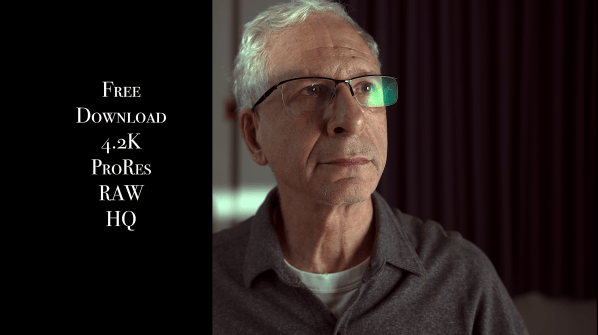
Get yours here. https://youtu.be/0Zt8LYD7GRs
The Future of YouTube
There's just something so immensely satisfying about watching Bad Derek's videos, possibly the very first YouTuber whose talking head HDR videos don't make us want to puke. It looks like he's owned practically every camera ever made. No joke. https://youtu.be/2B08gMUqbGU https://youtu.be/IGDvJqsKLZM https://youtu.be/x1jeulER7Dg
DJI Ronin 4D vs. Sony a7s III Colors

In his review of the Ronin 4D, Caleb Pike finds the colors remarkably similar to those of the Sony a7s III.
How Should Scopes Appear in HDR PQ?
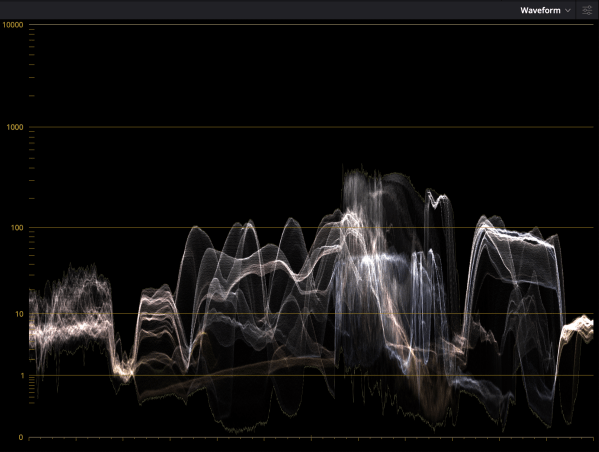
Concerning the often asked question of how HDR scopes should appear in your NLE, one significant difference is that in SDR, the signal can ordinarily fill out the scopes, say, from 0-1023, while in HDR PQ, the bulk of the signal will usually be bunched up toward the bottom end of the waveform, from 0-200... Continue Reading →
Cullen Kelly Disentangles Print Film Emulation

Part I: The State of HDR Film Emulation LUTs Part II: Moving Beyond Traditional Film Print Emulation Part III: Negative and Print Clarified During an episode of Grade School, a weekly YouTube Live session where he answers questions on all things color grading, Cullen Kelly untangles the confusion surrounding the order of operations, print vs. negative... Continue Reading →
Hypocrite

Frequent Blackmagic forum contributor John Brawley never tires of calling colleagues in the film industry shills and accusing RED of being unethical, but the DP prefers to downplay his own role as official brand ambassador for a scandal-ridden conglomerate guilty of one of the worst cases of financial corruption Japan has ever known. How is... Continue Reading →
Netflix Outlines Three Approaches To On-Set Monitoring
Acknowledging that HDR monitoring for every display on-set for the entire length of a production is prohibitively expensive for most productions, Netflix proposes three alternatives: CAMERA TESTS (E.G. HAIR & MAKEUP TESTS) Camera tests for hair and makeup are typically the first time images are evaluated and sent through the entire production pipeline. Some productions... Continue Reading →
Resolve 17 Highlight Bug A Feature?

We wrote about this back in August. Supposedly, Blackmagic was on top of it. The highlight tool hasn’t worked properly when using the HDR panel in Resolve 17 since day one. X-Rite WB Card Power Window + Highlight Tool Adjusting Global wheel in HDR tools breaks highlighter. Adjusting Offset wheel in Primaries, highlight behaves normally.
LG OLED.EX: Thinner, Brighter, Improved Picture Quality
LG Display announced a breakthrough in OLED TV technology set to begin production this year and which they are calling OLED.EX. According to the Korean manufacturer, deuterium compounds together with personalized algorithms that learn individual viewing patterns to more efficiently control the display’s energy input will enable an increase in brightness by as much as... Continue Reading →
The Hand of God

DP Daria D'Antonio demonstrates an understanding of HDR in her sumptuous work on Sorrentino's semi-autobiographical coming-of-age film The Hand of God, now showing on Netflix. Unfortunately, the brightly lit exterior scenes lit up our entire room, reflecting back onto the screen and ruining the experience - making us wish we could paint the walls black!
The Samsung X5 Is Wicked Fast

The very first portable SSD drive we've ever owned, the Samsung X5, is crazy fast. It also gets quite toasty - even when unmounted. It took just three minutes to copy a 240GB folder of ProRes 4444 clips and some random screen grabs from our 16" M1 Max MacBook Pro to the X5 and a... Continue Reading →
HDR Luminance Levels
If you leave the house, walk around and point your camera anywhere, it's all but impossible not to encounter luminance values measuring in the hundreds or even thousands of nits. But turn on the TV and watch a Dolby Vision program on Netflix and 99% of the time, it seems like there aren't any luminance... Continue Reading →
HDR: How Much Dynamic Range Should The Camera Have?
“Although there is no official standard regarding the dynamic range definition of HDR, it is generally recognized that a lower threshold for HDR is 13 stops or 8000:1, advancing via 14 stops or 16,000:1 to the current de facto ‘standard’ of 15 stops or 32,000:1. Most of the latest generation of digital motion picture cameras... Continue Reading →
Affordable MicroLED TVs A Decade Away
Analyst Bob O’Brien, assessing his predictions for the display industry for 2021, admits he greatly miscalculated MicroLED TV shipments for the year, writing, “We were wrong in predicting that the lowest priced MicroLED models would be offered at less than $100,000 in 2021, and even with a very low unit forecast, we overestimated TV shipments... Continue Reading →
16″ M1 Max MacBook Pro: How Much RAM for Mastering HDR?

Several YouTubers have said that in 99% of cases, they saw no advantage to spending the extra money to upgrade from 32GB to 64GB RAM for the 16" M1 Max MacBook Pro. Our findings may surprise you. We'll begin with Final Cut Pro and Apple Compressor. Timeline in Final Cut Pro. Two ProRes 4444 4K... Continue Reading →
ProRes RAW HQ vs. ProRes 4444
With the new M1 Macs, transcoding to ProRes 4444 from ProRes RAW is blazing fast in Compressor and it's visually lossless to boot. https://youtu.be/wVZm9fmp4Kw
Tip of the Day

Forget about proper video levels, color gamuts and bit depth and consider the lowly hot shoe cover protector cap for a moment. Here's how we keep from losing that little bugger when attaching the Rode Wireless GO!

