During a Team Deakins podcast discussion about HDR, Steve Yedlin characterized established, mainstream HDR color spaces like P3-D65 as undocumented, unstable "hybrid" systems that entail substantial risk, citing an unverified anecdote about oversaturated deliverables. “A lot of times the deliverables are done in sort of hybrid color spaces where they're not using one of the... Continue Reading →
MaxCLL ≠ HDR Quality: Spatial Contrast FTW
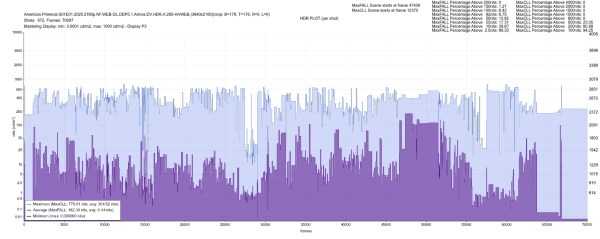
There's a perception going around that higher MaxCLL statistics indicate 'better' HDR. Many confuse the purpose [1] of MaxCLL and MaxFALL metadata—which is to inform display tone mapping—with actual HDR quality. HDR's superiority lies in preserving spatial contrast relationships, not in chasing extreme luminance levels. This conflation of display capability (e.g., the 10,000-nit reference) with... Continue Reading →
Steve Yedlin Fundamentally Misunderstands Color Science

“My HDR demo that's nominally about HDR kind of almost secretly is a color space demo more than an HDR demo in a way.” Steve Yedlin, Team Deakins Podcast https://youtu.be/uqkei9jdkjc Clip from Steve Yedlin’s “Debunking HDR” (ITU-R BT.2100 ≠ SMPTE ST 2084 added) In the above clip, from his presentation “Debunking HDR,” cinematographer Steve Yedlin... Continue Reading →
The HDR Contradiction: A Colorist’s Confession
The Cover-Up “Steve Yedlin's masterclass 'Debunking HDR' reshaped my mental model [...] It showed me [...] the struggles we've faced weren't personal failures. They were expected outcomes of a system oversold as a revolution. We've been told HDR is the future [...] But what if much of that is just marketing dressed as innovation? According... Continue Reading →
How Conflict-Avoidance Shortchanges Students
“I totally agree Daniel! Thank you very much for saying what I'm sure many of you have been thinking for a long time, and especially since Steve Yedlin's “Debunking HDR” talk! What empty debates have formed on social media, about this! I recently gave a talk on color management, and I made sure to do... Continue Reading →
Industry Call to Reconsider Rec.2020 as a Mastering Standard
The Case Against Gamut Chasing Flanders Scientific CEO Bram Desmet has called on standards bodies to curb the pursuit of Rec.2020 as a mastering gamut. While acknowledging its role as a container for content delivery, Desmet argued that implementing Rec.2020 for mastering poses significant challenges. "Let's stop chasing Rec.2020," he stated, emphasizing that most major... Continue Reading →
Supplement To “HDR Myths” Post

Spatial Contrast: Spatial contrast refers to the difference in brightness between adjacent areas in an image. Why it matters: HDR’s superpower isn’t extreme nits—it’s faithfully reproducing spatial contrast relationships that SDR compresses. Supplement to: HDR Myths, Terminology-Driven Workflow Errors + Practices, Etc. The Path Forward Expose for highlight retention (ETTR) Grade for local,... Continue Reading →
HDR Myths, Terminology-Driven Workflow Errors + Practices
HDR in Practice: Separating Technical Reality from Cinematic Mythology Persistent misconceptions about High Dynamic Range imaging—from exposure dogma to creative workflows—continue to undermine its potential. This critique dismantles a dozen pervasive fallacies using empirical research and industry evidence. Practically each myth violates fundamental vision science, a theme that will be developed further in our upcoming... Continue Reading →
Why We Can’t Stay Silent
Estamos cansados—tired of the gaslighting. But silence lets misinformation win. This breakdown helps you recognize manipulation tactics corrupting our industry. Naming them is professional accountability, not personal attack. Tactic: Scapegoating Tools “Ideally, standard naming should make communication simpler. But I get how challenging it is to maintain clarity while evolving the standards themselves. What I... Continue Reading →
Secretly A Demo
Listening to a celebrated DP explain HDR to revered colleagues on a popular podcast the other day was like overhearing a 17th-century explorer describing fantastical beasts to their monarch: “And you won’t believe this, but this “so-called HDR” actually has TWO color spaces! But sometimes they use the smaller one - a “hybrid”, so to... Continue Reading →
Gaslighting: How ‘Anti-Gatekeeping’ Rhetoric Shields Misinformation
“Those of us in post-production live at the crossroads between artistic and technical. I've noticed a troubling trend: using technical knowledge as gatekeeping - ridiculing those who don't use 'right' terms instead of fostering collaboration." - Daniel Bañuelos Cuéllar| LinkedIn (July 2025) Spread Inaccuracies —> Play The Victim Bañuelos’ “anti-gatekeeping” plea is damage control for... Continue Reading →
Resolve’s Bundling vs. Yedlin’s Conflation
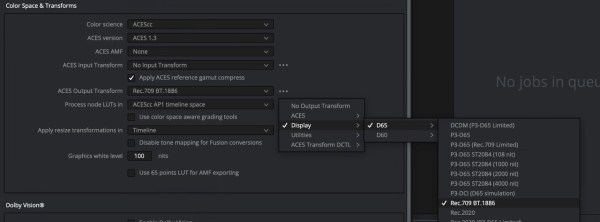
Steve Yedlin claims ITU-R BT.2100 = SMPTE ST 2084. A DaVinci Resolve certified trainer messaged me, remarking that DaVinci Resolve uses the same terminology as Steve Yedlin does in his anti-HDR presentation: “Hi Jon! I think this kind of labels in Davinci Resolve, also referred as "display color space" as Yedlin use in the image... Continue Reading →
Steve Shaw’s BT.1886 Stance Contradicts His Yedlin Endorsement
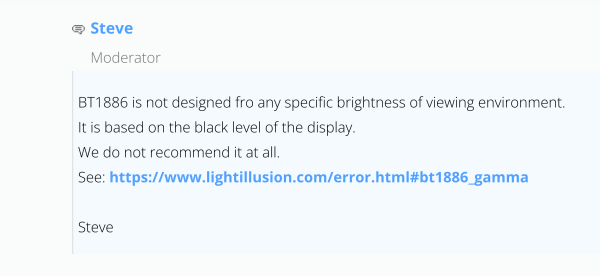
“BT.1886 is not designed for any specific brightness of viewing environment. It is based on the black level of the display. We do not recommend it at all.” - Steve Shaw, CEO of Light Illusion (2019) This unequivocal rejection from a calibration-industry leader dismantles Steve Yedlin’s core argument in "Debunking HDR" — that SDR workflows... Continue Reading →
Revisiting the HDR vs. SDR Debate: Preserving Creative Intent in Display Tech
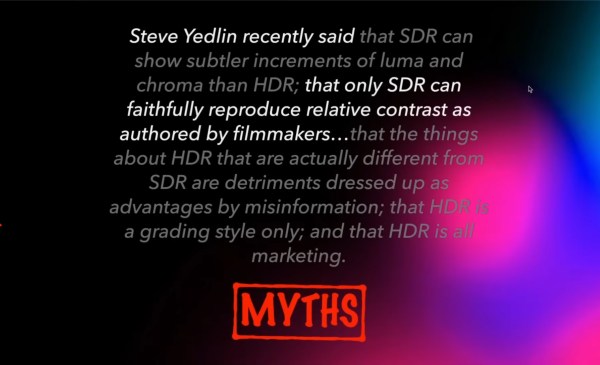
Steve Yedlin’s presentation “Debunking HDR" makes a bold claim: “Only SDR can faithfully reproduce relative contrast as authored by filmmakers." This argument underpins his entire critique of HDR workflows. During a Technical Webinar, Dolby’s Samuel Bilodeau directly challenged Yedlin’s core premise. https://youtu.be/gT8Arb7xp3I?si=AYH0Y6IWXLK2B56d&t=1745 Bilodeau argues (29:00): We don't broadcast BT.1886; we broadcast Rec.709. When combined, Rec.709... Continue Reading →
Defending the Indefensible: How Industry Credentials Shield HDR Misinformation
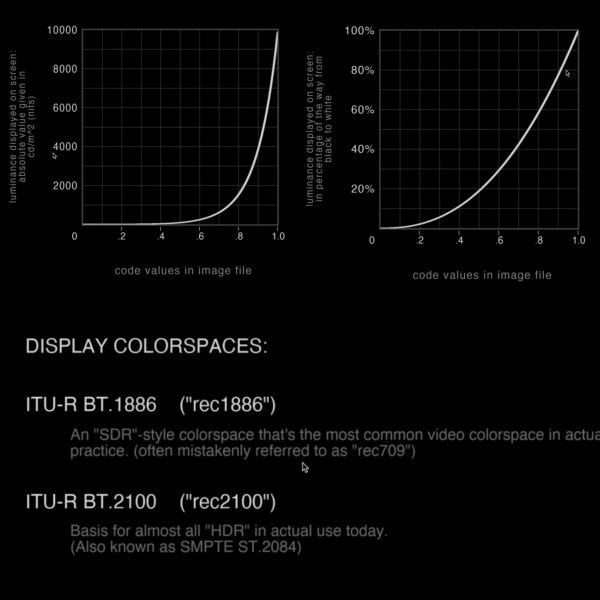
In “Debunking HDR”, Steve Yedlin commits two serious technical sins - he mislabels BT.1886 (an EOTF) as a “color space” and falsely claims BT.2100 = SMPTE ST2084. This isn’t semantics - it’s professional negligence. This misrepresentation has fueled an epidemic of color-spec illiteracy. Enter Stephen R. George Jr., a veteran of Sony, Technicolor, ARRI and... Continue Reading →
Weaponizing History To Defend LDR
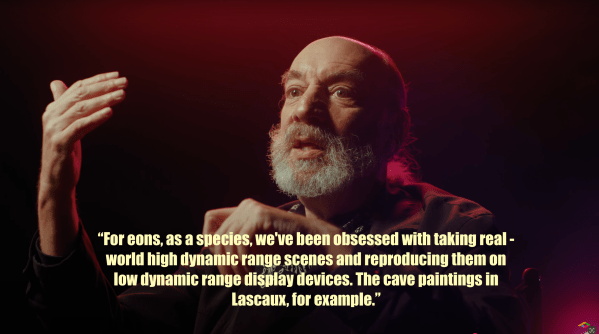
A prominent display calibration company portrays color scientist Josh Pines as a rebel challenging industry norms. But Pines’ rhetoric reveals a deeply reactionary mindset. Worse, companies like Portrait Displays platform his anti-HDR views while selling HDR tools - a paradox exposing industry-wide dissonance. "For eons, as a species, we've been obsessed with taking real world... Continue Reading →
The HDR Misinformation Dossier
Compiled by Jon Pais/Daejeon Chronicles | Supporting the upcoming manifesto: The HDR Creator’s Companion 🎉 The Problem High Dynamic Range (HDR) video is plagued by persistent myths, technical misunderstandings, and pedagogical malpractice. Worse, when confronted with evidence, prominent figures and organizations consistently double down on their errors rather than correct them. This stifles creativity, misleads... Continue Reading →
The HDR Rebel Who Never Was

“This is really about hitting the audience in the head with a tremendous amount of light that you get in HDR. You know, which is kind of an unappreciated advantage of the format, because you can use it for dramatic effect. It’s not about detail. You can actually use it as a storytelling tool, which... Continue Reading →
The ND Filter Debate: Light Illusion vs. Portrait Displays
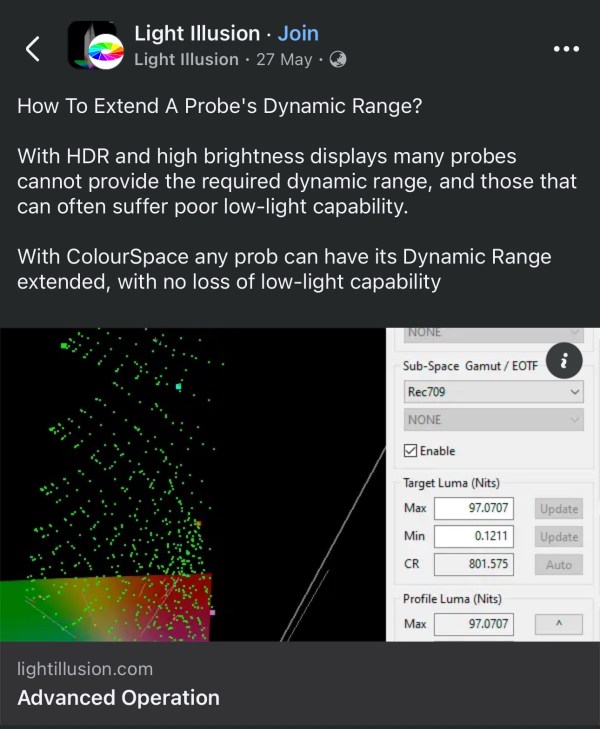
Clashing Philosophies As HDR displays push peak brightness beyond 4,000 nits, the calibration industry faces a pressing challenge: how to accurately measure extreme luminance ranges without compromising color accuracy. Light Illusion, led by CEO Steve Shaw, and Portrait Displays hold diametrically opposed views on using ND filters to extend probe capabilities. Shaw champions ND filters... Continue Reading →
Why Only 8-Bit TPG?
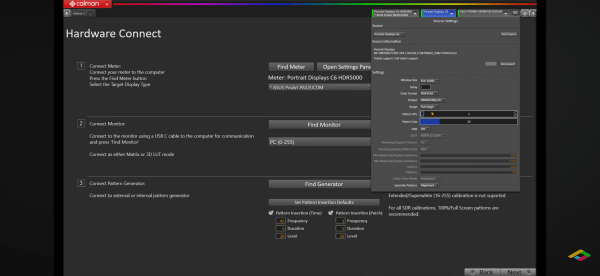
https://youtu.be/43NwBvCT1gk?si=I5Zu2Z6HmQpizsuD Incidentally, in the video, Dave says, “It’s important to note that on the Asus monitor, the internal pattern generator is not not supported for HDR.” 😱 Why 8-bit in HDR? What's the point of a 10-bit colour monitor then? Some are asking why Dave Abrams sets the test pattern generator to 8 bits rather... Continue Reading →
 The Daejeon Chronicles