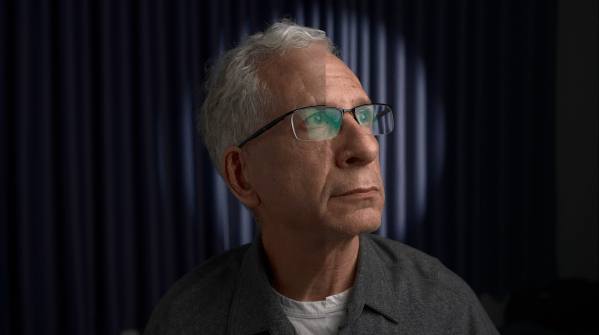
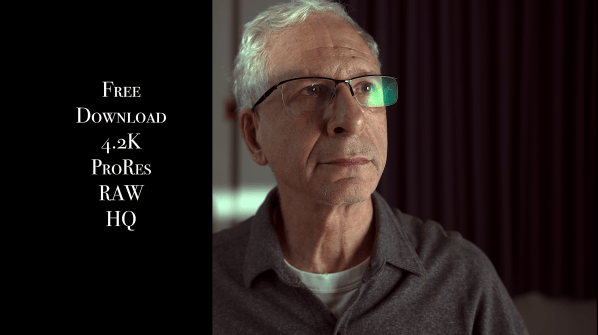
Grade Reveal & Download with Grain Added

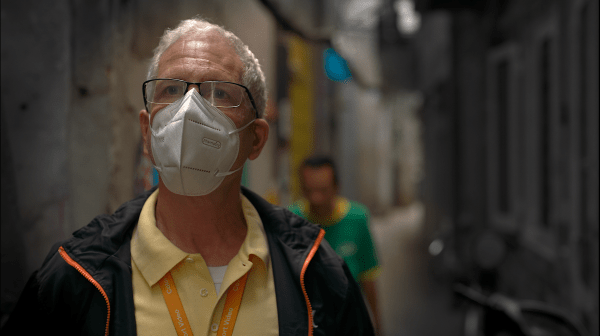
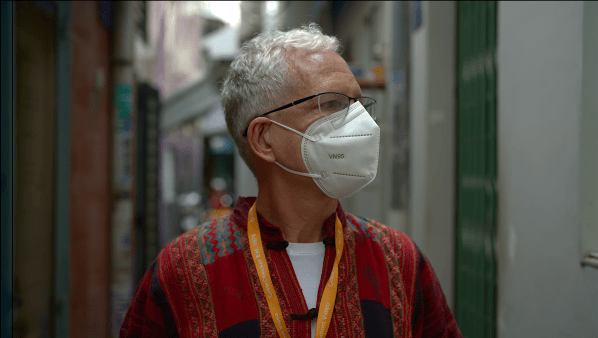
This video is the culmination of the many changes we've made since around the time we switched over to P3-D65 - some tiny, some significant - from shooting S-Gamut3.cine rather than S-Gamut3, avoiding yellow in the false color guide of the Ninja V for anything but specular highlights, monitoring with video levels instead of full... Continue Reading →

HEVC Main10 vs. HEVC Main 4:2:2 10

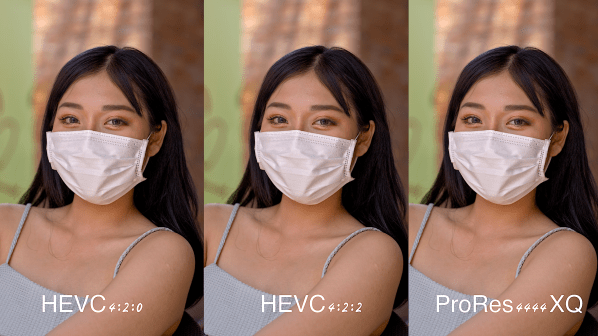
A little while back, we reported that Blackmagic Design had added support for HEVC 4:2:2 Main10 on Apple Silicon in DaVinci Resolve. What we didn't realize at the time was that the render page now had three selections for encoding HEVC: Main (8-bit), Main10 (10-bit 4:2:0) and Main 4:2:2 10. Using Invisor, an app brought... Continue Reading →

Split-Toning

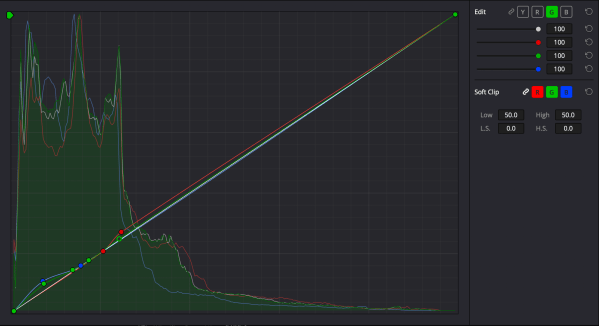
Split-toning is a characteristic of film stocks where you’ll see cool shadows and warm highlights adding color contrast to the image. This is accomplished by un-ganging the channels and adding a few pixels of blue and green to the shadows, a tiny bit of red and green to the highlights. Once you’ve made your adjustments... Continue Reading →

Back to Basics

We're not gonna lie - it's great to be able to just hook up the SSD from the Ninja V and start grading the RAW files immediately in Final Cut Pro with no transcoding. Apart from using it to white balance our shots, we've ditched the bad old ColorChecker altogether. Color charts are made for... Continue Reading →

Dynamic Range

"Please keep in mind that HDR is totally different than SDR. This starts with light setups for your scenes and it ends with differences in color grading, especially in color space, gamma and bit depth, to name just a few. Additionally it's important to know that you should use at least 10-bit and log footage.... Continue Reading →

S-Gamut3 or S-Gamut3.Cine?

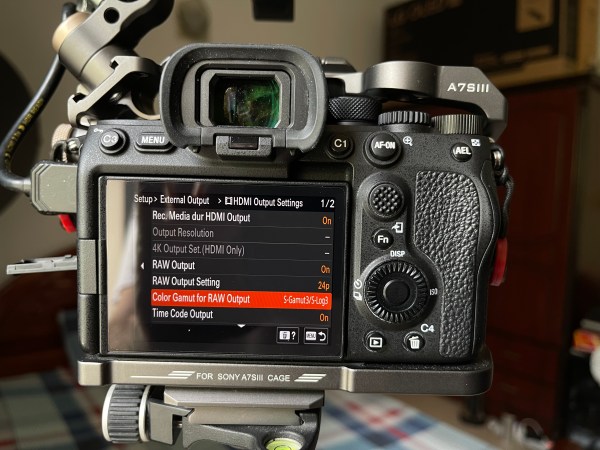
We've written extensively about the benefits of shooting RAW but once you've picked up your Ninja V, you might still be wondering which color space to use. For HDR acquisition, we recommend: Format ProRes RAW HQ or ProRes RAW Quantization 16-bit linear OETF S-Log3 Color Space S-Gamut3 or S-Gamut3.cine Dolby writes, "Where content is going... Continue Reading →

TCL Triggers Karen

The announcement by TCL, the world's second largest television manufacturer, of their intention to bring the TrueCut Motion platform to their TVs in North America, made Eugenia Loli’s pea-sized brain misfire, prompting her to blurt out: Seriously? Of the 2,700-odd movies produced worldwide each year, 99.99% are shot at 24 frames per second - yet... Continue Reading →

Sony a7s III Internal Codec vs. ProRes 4444

ProRes RAW HQ transcoded to ProRes 4444 is brighter, less green, has greater contrast, increased saturation and significantly higher resolution than the internally recorded S-Log3/S-Gamut3 XAVC S-I codec. Below are screenshots of the HDR footage dropped onto a rec. 709 timeline with a custom curve added to preserve highlight detail and a hue adjustment to... Continue Reading →

The HDR Fallacy

Several years ago, James Mathers wrote, "I’m no expert on the subject of HDR, but as a Cinematographer, I’m not sure I really need to be. To use an expression coined by my fellow Cinematographer friend, Bill Bennett, ASC, “we’ve been shooting HDR for years.” That’s because film and more recently high end Digital Cinema... Continue Reading →

Universal: The Bus Fight From Nobody in HDR

Let’s hope this is a sign of things to come. https://youtu.be/_2un1aU7mT0 And some more titles in 4K HDR: https://youtu.be/6HRy9ygjD9M https://youtu.be/bjDaVN2HMbs https://youtu.be/xMeFaxdtGfg https://youtu.be/CSkHnz5a68Q https://youtu.be/439pP_kn76w https://youtu.be/emH_YzWLnc8 https://youtu.be/0tbe7fve1vk https://youtu.be/UG60BDOBAEg https://youtu.be/Rnam_wHwVWE https://youtu.be/4n36ennMDs8 https://youtu.be/3qJEFIVYr_c https://youtu.be/ExCP-ST0W48 https://youtu.be/_mrNhIxOGzw https://youtu.be/FvZv-WkgwOU https://youtu.be/f49sVrIw4uM

How Should Scopes Appear in HDR PQ?

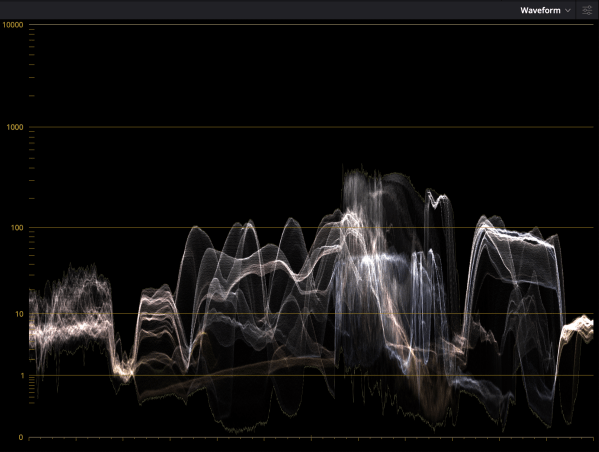
Concerning the often asked question of how HDR scopes should appear in your NLE, one significant difference is that in SDR, the signal can ordinarily fill out the scopes, say, from 0-1023, while in HDR PQ, the bulk of the signal will usually be bunched up toward the bottom end of the waveform, from 0-200... Continue Reading →

Cullen Kelly Disentangles Print Film Emulation

Part I: The State of HDR Film Emulation LUTs Part II: Moving Beyond Traditional Film Print Emulation Part III: Negative and Print Clarified During an episode of Grade School, a weekly YouTube Live session where he answers questions on all things color grading, Cullen Kelly untangles the confusion surrounding the order of operations, print vs. negative... Continue Reading →

Netflix Outlines Three Approaches To On-Set Monitoring

Acknowledging that HDR monitoring for every display on-set for the entire length of a production is prohibitively expensive for most productions, Netflix proposes three alternatives: CAMERA TESTS (E.G. HAIR & MAKEUP TESTS) Camera tests for hair and makeup are typically the first time images are evaluated and sent through the entire production pipeline. Some productions... Continue Reading →

Resolve 17 Highlight Bug A Feature?

We wrote about this back in August. Supposedly, Blackmagic was on top of it. The highlight tool hasn’t worked properly when using the HDR panel in Resolve 17 since day one. X-Rite WB Card Power Window + Highlight Tool Adjusting Global wheel in HDR tools breaks highlighter. Adjusting Offset wheel in Primaries, highlight behaves normally.

Blog at WordPress.com.

Up ↑