Why We Ditched The Sony Bravia XR A95L QD-OLED

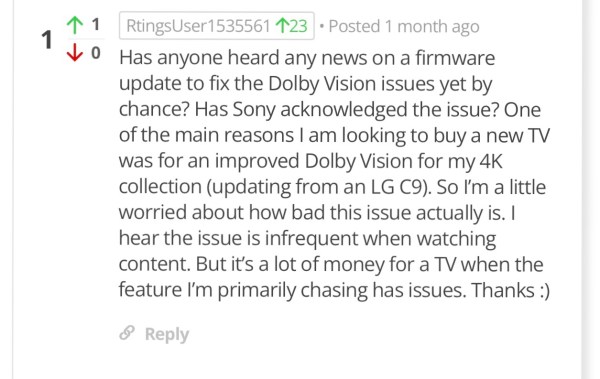
When streaming Dolby Vision content, either with an Apple TV 4K (3rd generation) or using the television's own Apple TV and Netflix apps, the A95L picture had horrific banding and posterization in some scenes. In low light shots, the picture becomes seriously desaturated and takes on a green tint. Sony's processing also adds undesirable sharpening... Continue Reading →

Greyhound Lacks Imagination

After reading an interview with the DP and colorist on the Apple TV+ war drama Greyhound (2020), we were really looking forward to seeing it. But it turned out to be no more than an SDR production from start to finish, with just a bit of gunfire and one scene in which Tom Hanks is... Continue Reading →

Art Adams – ARRI Lens Specialist

Before Art Adams became a spokesperson for ARRI, he was a reliable source of information. But since taking on the job of lens specialist for ARRI, he’s done an about-face on ARRI color science and dynamic range. An oft-quoted article by Art Adams attributed much of ARRI cameras’ resemblance to film to how saturation ‘locked... Continue Reading →

600 Nits Seems To Be The Magic Number

We’ve remarked before how the figure 600 seems to crop up every time a colorist is asked about the peak nits of their projects. Here are a couple more data points. Cullen Kelly: Do you impose a hard speed limit on your projects? Corinne Bogdanowicz: I don't have a hard rule or setting that I... Continue Reading →

HLG For Social Media Using MacBook Pro With Apple Silicon: DaVinci Resolve Studio 19 Settings

https://youtu.be/VoTrassfzzs The following are our preferred project settings for delivering HLG HDR to YouTube. 1. Display HDR Video (P3-ST2084) 2. Preferences. Decode Options. Decode H.264/H.265 using hardware acceleration. 3. Preferences. Use 10-bit precision in viewers if available. Use Mac display color profiles for viewers. 4. Color Management settings. Color science may be DaVinci YRGB (for... Continue Reading →

Pick Up Free Color Grading & Look Design Kit

This kit includes: - Kodak 2383 Film Print LUT for ACES and DaVinci Wide Gamut- Mid-grey Cheatsheet with reference points for 14 different tone curves- An Exposure Chart DCTL that gives a customizeable ramp and step chart for 14 different tone curves inside Resolve- YouTube & Frame.io Export LUT

LG: HDR10 No Longer At The Top Of The HDR Hierarchy

In April, LG published a help guide entitled Dolby Vision vs. IMAX and HDR10: A Comparative Analysis. Here’s some of what the Korean electronics manufacturer had to say about Dolby Vision and HDR10: Dolby Vision “Dolby Vision is a visual technology designed to enhance the viewing experience to unprecedented levels. It empowers visual creatives to... Continue Reading →

Improve Netflix Streaming Quality

Upgrade Internet Service If you've got a terminally slow internet connection, you might consider upgrading your service. The recommended speed for UHD is 15 Mbps or higher. Before upgrading service After upgrading service From a web browser Check Account Settings Go to Playback Settings and make sure Data Usage per screen is set for the... Continue Reading →

The Benefits Of Shooting 8K

Alister Chapman writes about the advantages of 8K and muses whether The Creator shouldn’t have been shot on the Sony A1 rather than the FX3: “Since the launch of Burano I've become more and more convinced of the benefits of an 8K sensor - even if you only ever intend to deliver in 4K, the... Continue Reading →

Calman Must Be Used On A Windows-Based PC

Apparently, Calman doesn’t work on Macs with Apple Silicon after all, though Bram Desmet (CEO, Flanders Scientific) says this configuration works for him in both Calman and ColourSpace: M2 Max. Sonoma 14.1.1. Parallels for Mac. Windows 11. Calman announced on back on Oct. 5, 2023: “While there are Apple Silicon specific versions of VMWare Fusion... Continue Reading →

Blog at WordPress.com.

Up ↑