Colorist Eric Weidt recounts how David Fincher would have him tailor the grade in order to align with consumer devices. Eric Weidt: Once, he [David Fincher] came into Los Angeles; he would stop by, because his office is right there... he would stop by, pop in. But really, you know, to him, it always looks amazing on... Continue Reading →
Short Takes: Is 1,000 Nits Enough?
Bram Desmet, CEO, Flanders Scientific, responds, “1,000 nits was enough because it's all we could do. The Dolby Pulsar was really the only display out there that people could really get their hands on that could reliably do over 1,000 nits well. The issue being, you couldn't even buy that, it was basically a lease-only... Continue Reading →
Flanders Scientific XMP550 55″ QD-OLED HDR Mastering Monitor

Flanders Scientific has announced the XMP550 reference mastering monitor featuring a UHD QD OLED panel with a peak brightness of 2,000 nits. The display is equipped with a waveform and vectorscope as well as an adjustable false color mode. The XMP550 also features Auto Calibration: simply plug in any supported probe and the monitor will... Continue Reading →
“HDR is just a standard. HDR doesn’t have any creative implication or aesthetic implication”
"HDR is just a standard. HDR doesn't have any creative implication or aesthetic implication. It's just a standard." Cullen Kelly Kelly used to be one of the most perceptive commentators on HDR, but ever since meeting Steve Yedlin, he's like a completely different person. In his most recent live stream, he says, “The first... Continue Reading →
RED Komodo: ISO & Noise Levels
The following were recorded in R3D Medium Quality with the body cap on the RED Komodo.
If You’re Using DWG, You Must Read This
An astrologer who shoots his content with a Sony mirrorless camera and who follows Cullen Kelly's YouTube channel asked whether it made any difference if he used Resolve Color Management and DaVinci Wide Gamut or a CST (as Cullen demonstrated in his short DaVinci Resolve tutorial) to which we replied: "They should look identical. However,... Continue Reading →
Setting A Speed Limit Should Not Be An Arbitrary Decision
Setting a speed limit shouldn't be an arbitrary decision that's imposed before even looking at the footage. It's critical to understand that as highlights are rolled off, detail, texture and contours are being tossed out and, if carried too far, what remains is no longer HDR, but brighter SDR. Even though the peak luminance of... Continue Reading →
The Alexa 35: ARRI’s Most Digital-Looking Camera
The Alexa 35 is arguably ARRI's most coveted camera to date, but it also the produces the most digital-looking footage of any camera the venerable German manufacturer has yet released. Noise The noise of Alexa cameras is said to have been modeled on scans of actual film grain, resulting in a more pleasing, organic looking... Continue Reading →
Erik Messerschmidt: Why HDR Production Monitors Matter
I didn't find that I was that worried about the toe in general. I was always looking at the highlights, particularly in contrasty situations, so the way that we had the the LUTs built, especially in the black and white version, was when the monitor clipped, the waveform clipped, and the sensor, the camera, told... Continue Reading →
Has anyone else seen this on a YT video before?

Last month, The Verge wrote about the feature: "YouTube's introducing an “enhanced” 1080p HD video quality for Premium subscribers — but it’s only available on iOS for now, with the option coming to web soon. According to YouTube, the new 1080p Premium option is “an enhanced bitrate version of 1080p” that’s supposed to make things... Continue Reading →
Atomos support for Apple ProRes RAW plugins
This is great news for ProRes RAW shooters. From NewsShooter: “Atomos has announced immediate support for Apple ProRes RAW plug-ins. Apple ProRes RAW plug-ins are a new innovation that lets camera manufacturers provide their own ProRes RAW processing pipeline to take advantage of the unique properties of their cameras, sensors, lenses, and more. With the... Continue Reading →
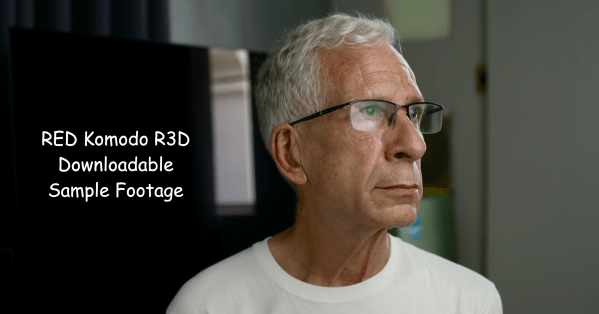
Lift, Gamma, Gain
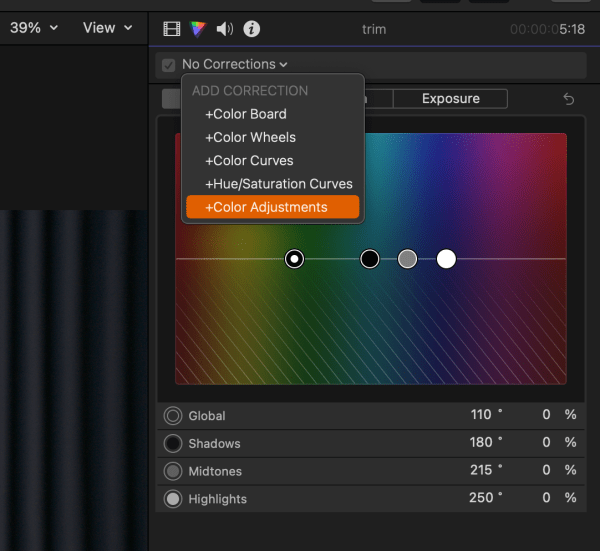
"It is also worth bearing in mind that the traditional lift, gamma, and gain operators are particularly unsuitable for acting on ST 2084 image data, where 0-1 represent zero to 10 000 cd/m2. Highlights, in particular, can swing uncontrollably into extreme values as a result of small changes. Modern grading systems offer alternate grading operators... Continue Reading →
ΔE ITP for the evaluation of HDR WCG displays
The current metric for evaluating displays, ΔE2000, has been under-predicting perceptual color differences, particularly when used for the evaluation of HDR and WCG displays. Charles Poynton argues that the industry should transition from CIE L* and CIE LAB to ΔE ITP. Poynton writes: A proposal has been made to use CIE LAB to quantify HDR gamut.... Continue Reading →
Priorities

Polly Morgan, who recounts how she ‘fought tooth and nail’ with Sony to be able to add grain to the excessively clean, digital looking Alexa Mini LF footage, was evidently very proud of herself for being able to collaborate on the Dolby Vision master of the excruciatingly dull Where the Crawdads Sing (Netflix), whose HDR, with highlights... Continue Reading →
Tyler Purcell Is A Moron

An old post over at Cinematography.com that never grows old. Tyler can be forgiven for thinking there's no HDR content on Netflix, but 2K deliverables? :))
Spotlight On Erik Messerschmidt, ASC: HDR Monitoring, Lighting Ratios, ETTR
"I used to embrace the romantic idea of a dramatic underexposure and very thin negative and I have gone the other way." Filmmaker Magazine: With the early Red cameras—back in the Epic days—I remember people talking about how you needed to expose to the right on the histogram because if you underexposed you were in... Continue Reading →
RED Komodo: To ETTR or Not?

In just the past 24 hours, there have been something like 175 visits to an old article we posted announcing our intention to return to ETTR with the RED Komodo, so we're guessing it's a somewhat controversial topic! To the best of our knowledge, few DPs on big productions ETTR but there do exist some... Continue Reading →
Working Color Space: What Colorists Aren’t Telling You
Almost without exception, colorists on YouTube who recommend using a working color space other than the native color space of the camera do so without explaining to their followers that this requires making a viewing LUT during pre-production. It’s difficult to conceive how anyone preoccupied with color management could overlook this critical detail. The following... Continue Reading →
Dolby Engineer Answers Our Most Pressing Questions!
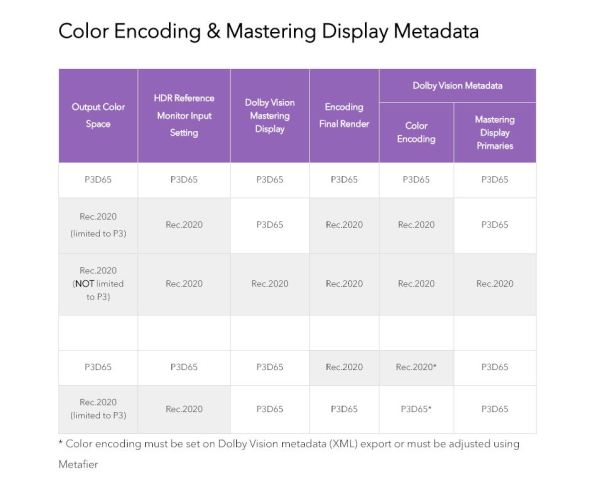
Update: Dolby changes stance on DRTs. We asked Nate McFarlin, Senior Content Engineer, Dolby Laboratories, a couple questions that have been troubling us for a while now: (1) Why exactly is it that Dolby insists on input and output DRTs being set to NONE in a Resolve Color Managed workflow; and (2) When mastering Rec2020... Continue Reading →

