Create Textural Depth II

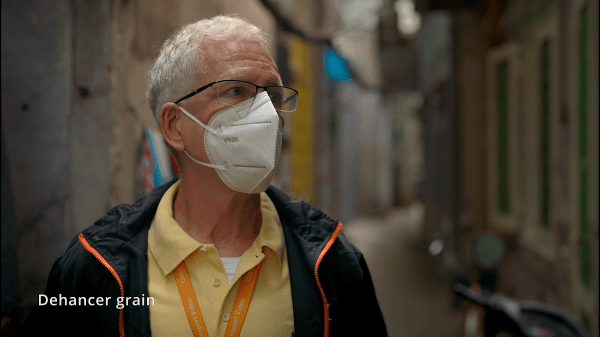
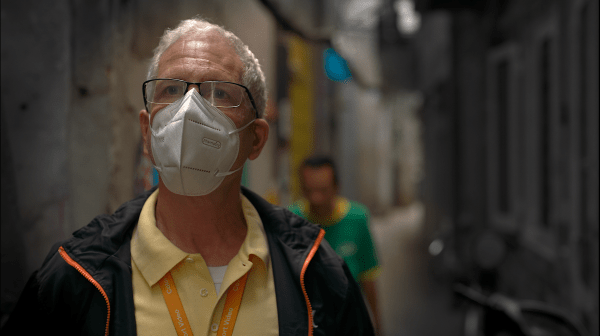
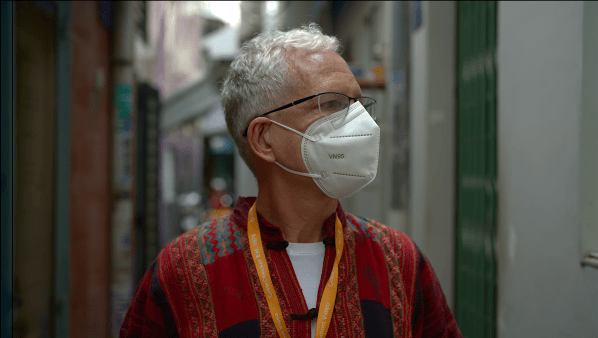
The viewer’s eye can be drawn to the subject in a number of ways. Two of the techniques employed here are color separation, achieved through split-toning, and obscuring the surroundings using a mask and reducing brightness. Another approach is to create textural depth by accentuating the texture in cooler, darker backgrounds while de-emphasizing grain in... Continue Reading →

Projector Central Weighs in on 4:2:0

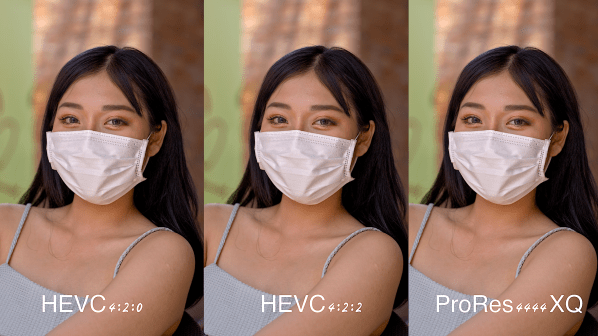
Over at Projector Central, Michael J. McNamara, former Executive Technology Editor of Popular Photography magazine and a renowned expert on digital capture, storage, and display technologies writes:  “Does using 4:2:0 subsampling significantly degrade image quality for movie viewing versus using 4:2:2? Not according to most viewers who've enjoyed any number of 4K UHD SDR and... Continue Reading →

Create Textural Depth!

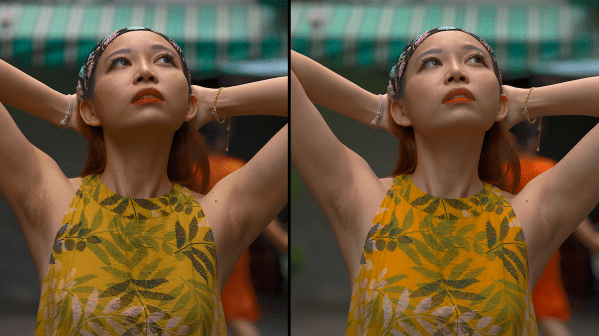
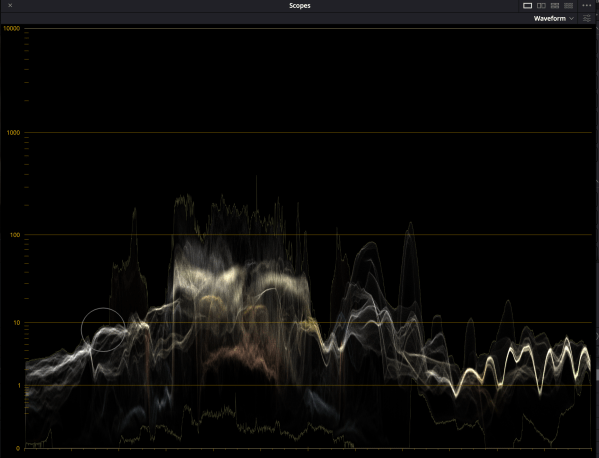
During an appearance on Cullen Kelly’s Grade School, the brilliant colorist Jill Bogdanowicz revealed a secret to accenting texture without it looking over-processed. While working on Joker, the colorist used Live Grain - which separates out the red, green and blue channels, creating grain that resembles scanned film - to accentuate texture in the cooler,... Continue Reading →

Not A Grade Reveal!

A few caveats: first, the original footage was green and overexposed; secondly, we didn't use the recommended DaVinci Wide Gamut; and lastly, as we do all of our grading before the LUT, the original footage looked nuts when we removed the LUT for the grade reveal, so we normalized it for the video. https://youtu.be/3Bv3RUGbwEc

Massive LUTs Required for HDR

According to at least one study, in order to achieve a comparably error-free 3D-LUT to those used for SDR, a LUT size larger than 55x55x55 is required for 12-bit HDR (Rec.2020 ST2084). "In 10-bit SDR, in order to achieve unnoticeable interpolation errors using the trilinear interpolation method, a 3D-LUT larger than 41×41×41 is necessary. However,... Continue Reading →

Apple’s Studio Display Unsuitable for Video Editing

Author, consultant, pro audio/video specialist, tech journalist and broadcaster Allan Tépper voices his suspicions that Apple’s Studio Display is not a true 10-bit panel at all but 8-bit FRC and discovers that it is limited to a single framerate/refresh rate, making it a much less attractive proposition for video editing/grading. “Despite it’s raved internal speakers... Continue Reading →

ICtCp, or Why We Can’t Have Nice Things

Here at the Daejeon Chronicles, we've tirelessly championed RAW for a long time now, for a multitude of reasons: it responds better to grading than heavily compressed, low bit rate chroma subsampled codecs and is less prone to banding; sharpening, noise reduction and white balance aren't baked into RAW files, giving more flexibility in post;... Continue Reading →

Grade Reveal & Download with Grain Added

This video is the culmination of the many changes we've made since around the time we switched over to P3-D65 - some tiny, some significant - from shooting S-Gamut3.cine rather than S-Gamut3, avoiding yellow in the false color guide of the Ninja V for anything but specular highlights, monitoring with video levels instead of full... Continue Reading →

Venice 2 Rolling Shutter Crushes It

The German website Slashcam, currently testing the Venice 2, had nothing but superlatives for its rolling shutter performance, pronouncing it the very lowest they have ever measured for a non-global shutter, leaving the competition in the dust. “When measuring the rolling shutter reading times, Venice pushed us to our limits. Or to the limits of... Continue Reading →

HEVC Main10 vs. HEVC Main 4:2:2 10

A little while back, we reported that Blackmagic Design had added support for HEVC 4:2:2 Main10 on Apple Silicon in DaVinci Resolve. What we didn't realize at the time was that the render page now had three selections for encoding HEVC: Main (8-bit), Main10 (10-bit 4:2:0) and Main 4:2:2 10. Using Invisor, an app brought... Continue Reading →

HDR Fallacies #3

Last year, we reached out to Atomos to ask why they didn’t upload more HDR content to their YouTube channel and they replied that not all projects are suited to HDR. Which is patently false: the video doesn’t exist whose image quality cannot be dramatically improved by mastering and uploading to YouTube in HDR.

Split-Toning

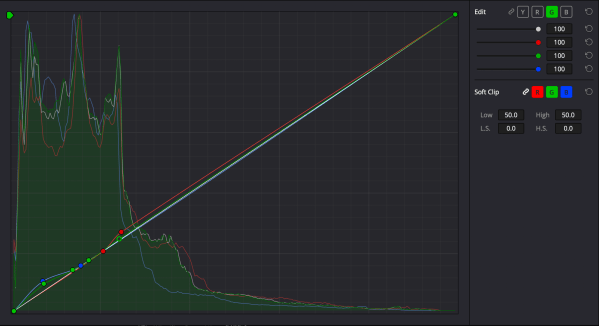
Split-toning is a characteristic of film stocks where you’ll see cool shadows and warm highlights adding color contrast to the image. This is accomplished by un-ganging the channels and adding a few pixels of blue and green to the shadows, a tiny bit of red and green to the highlights. Once you’ve made your adjustments... Continue Reading →

Blog at WordPress.com.

Up ↑