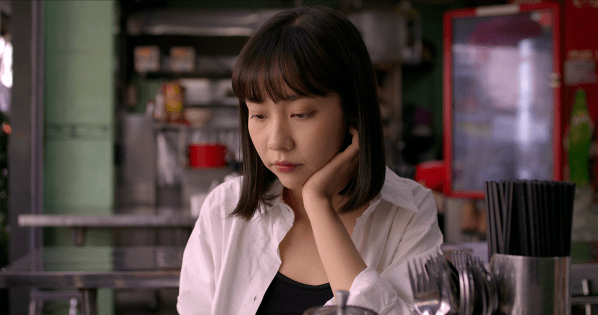
Can't say how much we appreciate the HDR Palette and customizable zones in DaVinci Resolve. In the screenshot, we targeted the tiny bit of light outdoors. You've still got to watch the waveform monitor when making adjustments though, since even when it looks like an area has been isolated in the viewer, the actual coverage... Continue Reading →
LG C3 4:4:4 Pass Through: No Longer Necessary To Go Through Convoluted Process of Enabling PC Mode
While testing out the new LG C3, Vincent Teoh discovered that enabling 4:4:4 pass-through has been simplified with the latest lineup of LG OLEDs. "Delving into the user menu, I saw a number of changes from what's found on last year's LG C2. One, if you go into the general submenu, scroll down and click... Continue Reading →
Colorist: Don’t Place Actors In Front Of Windows
Colorist Asa Shoul, on more than one occasion, including during an interview with Variety, counsels cinematographers, “When discussing the dos and don’ts of HDR, I would advise not placing actors in front of windows as the extra brightness that can be seen in the sky might make the actor appear less visible.” Which is among... Continue Reading →
HDR: Does Pupil Variability Cause Excruciating Agony?
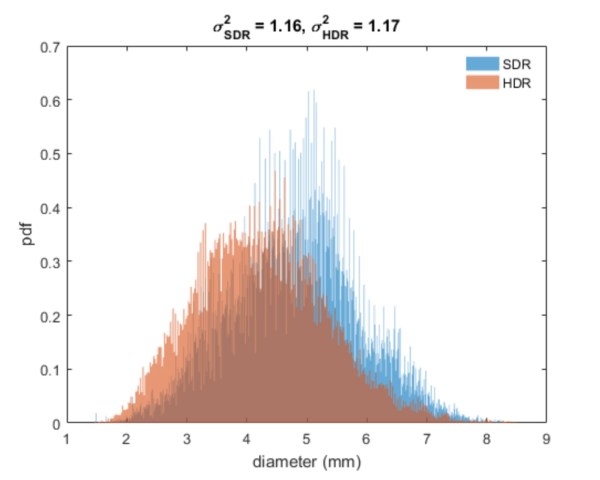
Pupillometry of HDR Video Viewing. Scott Daly, Evan Gittermana, and Grant Mulliken. Dolby Laboratories, Inc., San Francisco, CA, USA Apple, Cupertino, CA, USA An excellent study by researchers from Apple and Dolby Laboratories investigates a common assumption that increased pupil variability causes discomfort while consuming HDR content. https://youtu.be/zl31JrOWiEg SDR version of the short film ‘Telescope’... Continue Reading →
You can put crazy numbers in MaxFALL and MaxCLL and get exactly the same picture
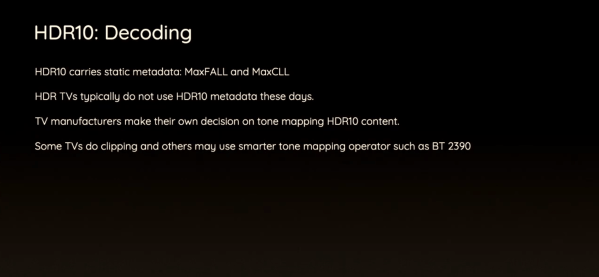
“Unfortunately, for HDR10, there is no reference implementation, like everyone does its own kind of HDR10, so some TVs do clipping, some TVs do their own kind of tone mapping, and in fact, if you mess up with the static metadata, like MaxFALL and MaxCLL, nothing happens in the picture, so trust me, you can... Continue Reading →
Steven Robertson: Don’t Use HDR Reference Mode On MacBook Pro
Steven Robertson, a software engineer at Google, offers up an irreverent, unique and often funny perspective on HDR, with an emphasis on UGC rather than multi-million dollar productions. Just one example: "We suspect that most of our audience who's going to be trying to grade HDR for the first time is going to be on... Continue Reading →
“HDR grades which offer little, to no benefit over SDR, will be rejected”
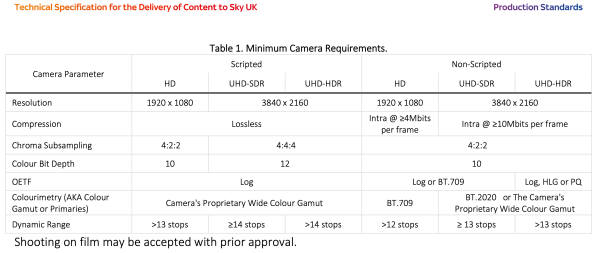
The following excerpts are from Technical Specification for the Delivery of Content Sky UK, the UK's largest pay-TV broadcaster. Primary Image-Acquisition To ensure viewers observe a noticeable improvement in resolution between the different definition tiers (e.g., HD and UHD) as well as SDR and HDR, the minimum camera requirements in Table 1 must be met... Continue Reading →
Chasing middle gray
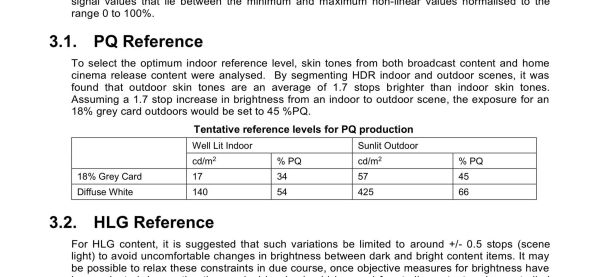
“We’re no longer exposing for middle gray and letting the rest “roll off.” […] Through all of these techniques, it’s important to recognize that our old friend and exposure aid, middle (18%) gray, will be of limited usefulness, as middle gray will shift with the audience’s adaptation to brightness changes. It may be possible for... Continue Reading →
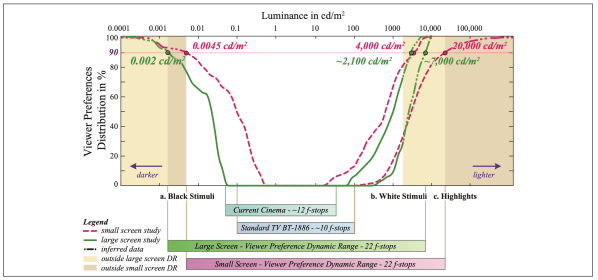
A Cinema Luminance Range by the People, for the People: Viewer Preferences on Luminance Limits for a Large-Screen Environment, by Suzanne Farrell, Timo Kunkel, and Scott Daly
A number of websites have published the findings of Dolby's study of luminance preferences for the small screen, yet they all but ignore the fact that Dolby also conducted a similar study with a large screen. Many assume that the larger screen in a movie theater only needs a fraction of the luminance of a... Continue Reading →
Assimilate Player Pro Studio cDNG Update
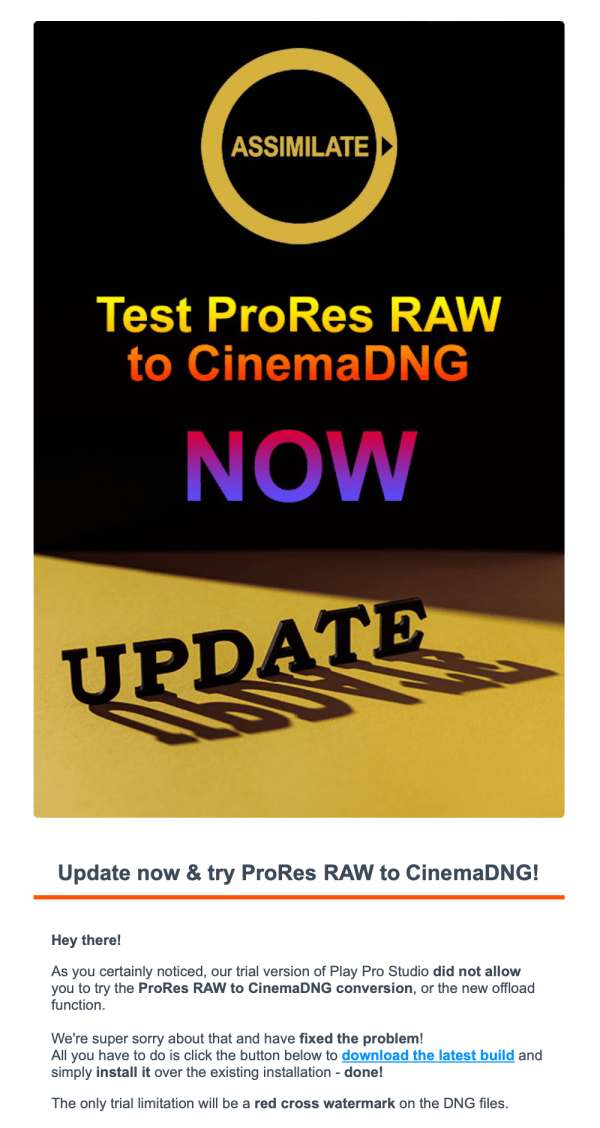
Assimilate Player Pro Studio ProRes RAW to CinemaDNG is available for testing as of now. The app has made Nikolaj Pognerebko's overpriced RAW Convertor with limited functionality completely irrelevant.
HDR Panelist Calls Colorists Children
At a BSC panel on HDR back in 2016, a speaker loses his mind over what will become of all of his beloved muddy DVDs and Blu-rays once they are remastered in high dynamic range, condescendingly referring to professional colorists as 'kids'. ARRI colorist Florian 'Utsi' Martin, sitting beside him, looks very uncomfortable.
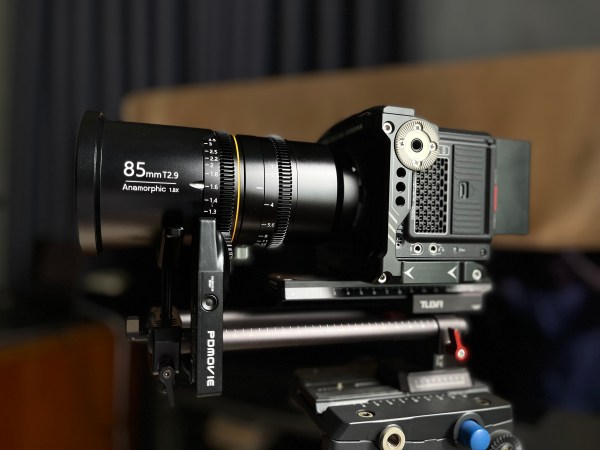
Great Joy 85mm T2.9 1.8X + RED Komodo (15 sec.)
There are 30-minuteYouTube tutorials on de-squeezing and aspect ratios but it looks like it’s done automatically in Resolve. It automatically chose 1.8 pixel aspect ratio upon import! There's a link to the original footage in the video description for those who dislike YouTube compression as much as we do. https://youtu.be/LtgHhejy8Hw
RED Komodo 6K Footage
There's a link to the original movie in the description for those who dislike YouTube compression as much as we do. The clip was minimally graded (reduced exposure, removed green tint) in ACES, no noise reduction in post. https://youtu.be/2oO4wRRevkk
It is extremely rare to find anyone who is finishing only in SDR
In an interview with the editor of Film and Digital Times, Greg Smokler, Director of Cine for Creative Solutions, says that few productions are only finished in SDR nowadays. Creative Solutions is a subdivision of The Vitec Group and is comprised of Teradek, SmallHD, Wooden Camera and Lightstream. Jon Fauer: Do SmallHD customers ask more for... Continue Reading →
HDR Requires Larger LUTs
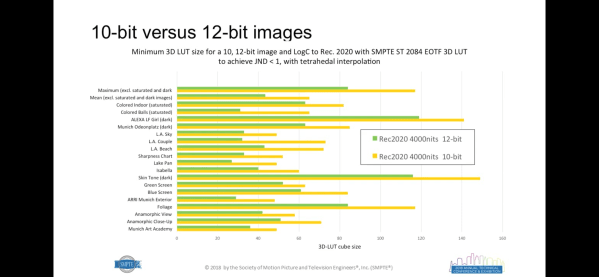
JD Vandenberg, Director of Post Production @ The Walt Disney Studios, found that 33X33X33 LUTs developed for SDR are too small for working with HDR footage. So what’s the minimum size 3D LUT required to minimize visual artifacts in PQ HDR content? Vandenberg’s study concluded that 10-bit material necessitates the use of LUTs that are... Continue Reading →
Just how common is highlight clipping in SDR content, anyhow?
Apparently, very common! According to the paper published by Michael Zink and Michael D. Smith, who analyzed hundreds of titles from the Warner Bros. catalogue in order to study outlier pixels, clipping is quite common in SDR, while its occurrence in HDR content is exceedingly rare. We should add that the SDR titles were in... Continue Reading →
At Last! A Metric To Describe The Color Volume Of WCG Displays
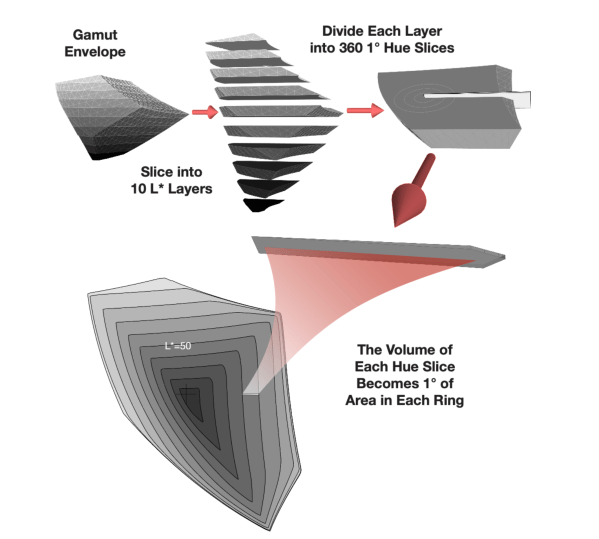
Since the ICDM has unequivocally endorsed gamut rings and the CIELAB color gamut volume for display measurement, it is hoped that we will see more meaningful comparisons of the actual color volume between different displays in the future, as current methods are meaningless for today's televisions, monitors, tablets, phones and laptops. From the Information Display... Continue Reading →
BBC: 12 Stops Required for HDR Programs
From the BBC Academy Guide: “The content needs to be captured in UHD. Specifically this means: • using a camera and lens that can deliver a resolution of 3840 x 2160 pixels • capturing at least 12 stops of dynamic range If you’re making a live BBC programme you’ll need a camera that outputs hybrid... Continue Reading →
HLG’s Lack of Saturation “Not Very Commercially Compelling”
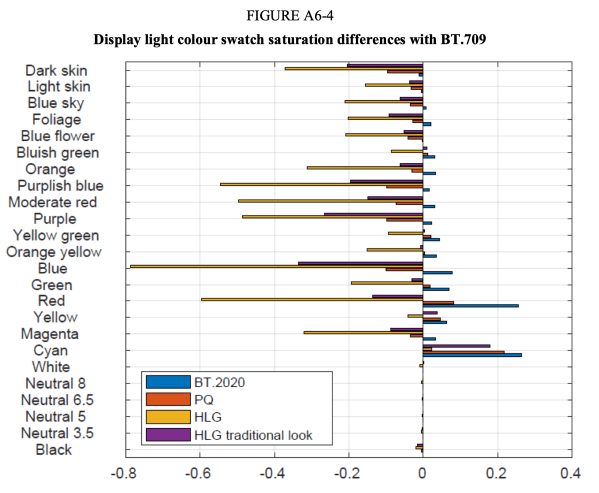
https://youtu.be/1r56JCpIMIs?si=H802qIF7v5mGGRsL https://youtu.be/YzVz4nxaT60?si=Xwz8DwVST2e5C0H4 The HLG format, by design, has the lowest saturation of all formats because it preserves the chromaticity of the scene as imaged by the camera; all other formats increase saturation compared to the scene as imaged by the camera. Earlier studies have shown that colorimetrically accurate reproduction of natural scenes does not necessarily... Continue Reading →
How To Avoid Outliers In HDR Static Content Metadata
It's definitely advisable to embed static metadata in your HDR10 videos, but doing so can actually end up making the picture worse on the viewing end if care is not taken to avoid outlier pixels - pixels that are unintended that fool the consumer's display, resulting in a dimmer image. Why don't current methods for... Continue Reading →