As the number of online HDR tutorials grows, it becomes necessary to separate the wheat from the chaff. The best way to go about that is pretty straightforward - just have a look at the content creators' own footage: is it noisy? blurry? are highlights clipped? how about tonal gradations, or lack thereof? compression artifacts?... Continue Reading →
Why HDR Production Monitors Matter, Part I
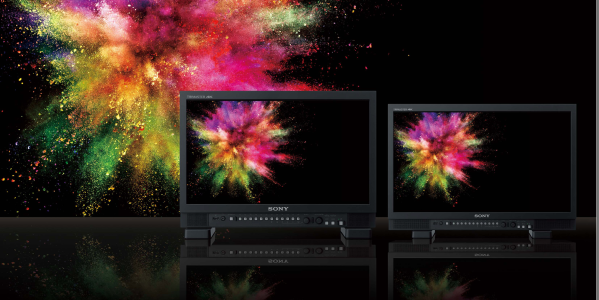
Why HDR Production Monitors Matter, Part I Why HDR Production Monitors Matter, Part II Why HDR Production Monitors Matter, Part III Why HDR Production Monitors Matter, Part IV “Unnecessary.” “Not possible.” “Fantasy.” Those are the words of a director of photography, slumming in L.A. since wrapping up shooting of a satirical period piece for Hulu,... Continue Reading →
HDR Quiz
1. On the HDR PQ curve, 100 nits is a. 10% of 10,000 nits peak level b. 25% of 10,000 nits peak level c. 50% of 10,000 nits peak level 2. The maximum pure blue in SDR is 10 nits. Maximum pure blue in HDR is a. 25 nits b. 50 nits c. 110 nits... Continue Reading →
LG G1 vs. Sony A90J: Which Is Best for Content Creators?
Vincent Theo of HDTVTest fame recently compared LG's G1 OLED to Sony's A90J, which in an earlier review he announced produced the most impactful HDR he'd ever seen from an OLED TV. Which is best for content creators who can't afford a USD $30,000 reference monitor? Sony's WRGB quad sub-pixel boosting A common complaint of... Continue Reading →
Ashley

In our long list of pet peeves related to HDR YouTube videos, obscenely bright specular highlights in the subject's teeth must rank among the most distracting. And as luck would have it, last night's shoot provides us with a perfect illustration. Peak highlights are brushing up against 400 nits, already several stops ETTR, but still... Continue Reading →
a7s III Skin Tones
While there are exceptionally few examples of actual living, breathing human beings in HDR YouTube videos, of the negligible number that do exist, too many suffer from one or more of the following: bizarre colors, excessive noise, outrageously intense specular highlights in teeth, eyes or jewelry and an obnoxious lack of tonality, hues, texture and... Continue Reading →
Nghi
We had to re-upload this video because the soundtrack is being released on a label and the owner revoked the creative commons license. Not sure how kosher that is. https://youtu.be/etGpDFxM9FA
Sony a7s III: Exceptional Value
Since we picked up a set of Nanlite Forza LED monolights and started grading ProRes 4444 in DaVinci Resolve Studio 17, it's like we're dealing with a completely new camera altogether! Skin tones are the most accurate we've seen from any mirrorless camera and the image quality rivals that of cinema cameras costing thousands more.... Continue Reading →
Sony FE 50mm f/1.2 GM First Sample Footage

Our stab at doing a focus breathing test failed miserably, but gives us a pretext to share some screen grabs demonstrating how to expose ProRes RAW HQ. Avoid bright orange and red of the false color guide of the Ninja V. The touch of red at the top of the clothes rack will be a... Continue Reading →
How to Shoot HDR: A Primer
The secret is to (a) shoot ProRes RAW HQ; (b) use the false color of the extraordinary Ninja V as a guide; (c) avoid the false colors bright orange and red; (d) transcode to ProRes 4444 in Apple Compressor; then (e) grade in DaVinci Resolve Studio. The shadow, midtone and highlight wheels of Final Cut... Continue Reading →
Ninja V False Color

There can never be too many blog posts on exposing for HDR! Ninja V False Color False color is a practically foolproof method for determining exposure for HDR. Avoid bright orange and red - colors that indicate overexposure. DaVinci Resolve 17 waveform before color correction. Although the tee shirt looks completely blown out on our... Continue Reading →
Tribute to Sony a7s III
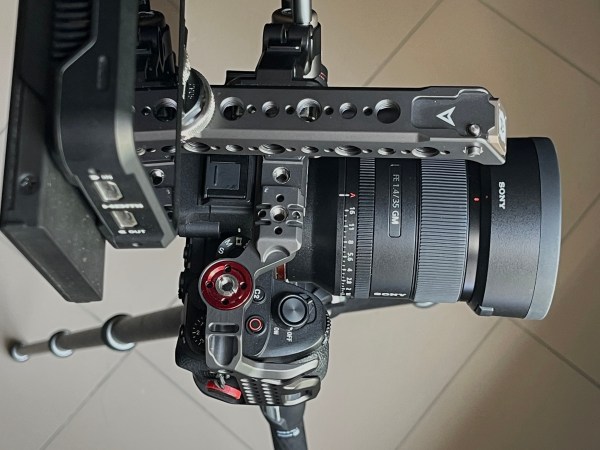
For a long while now, we've been keenly aware that highlights in skin tones and light-colored fabrics have been difficult if not impossible to recover in post, leading us to re-examine our ETTR method. After watching a video by Gerald Undone, we tried using two zebra settings, aiming for an ETTR of only +1.66 stops... Continue Reading →
Monster Guide: HDR10 in Resolve Studio 20 (Part II)
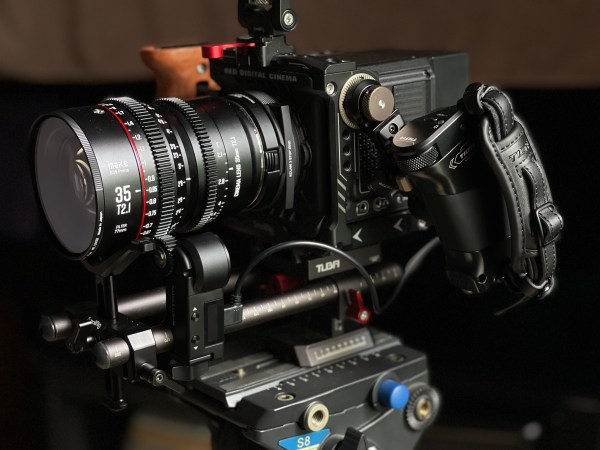
Part I: Project settings, Project Render Settings, Generate MaxCLL and MaxFall HDR10 Metadata Part II: RAW Part III: The Grade Part IV: Why HDR Production Monitors Matter Avoid Y’CbCr Limitations of Y’CbCr with wide colour gamut and high dynamic range Quantization distortions due to bit depth limitations with the increased colour volume. Chroma subsampling distortions due to... Continue Reading →
RAW Power!
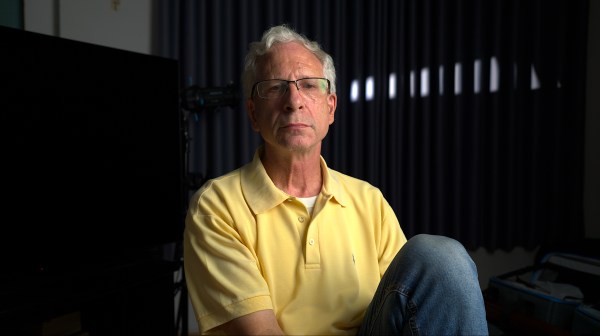
In the video, we demonstrate one way to create depth and contrast for HDR in a hopelessly cramped living space (16 m2) using lighting modifiers - specifically the Nanlite Projection Mount and Aputure Lantern Softbox - along with the Nanlite Forza 300 and Forza 60. Nanlite PJ-FZ60-19, Forza 60 We've spared no effort in order... Continue Reading →
Big Announcement!

Now that we were able at last to get our hands on an Arca Swiss QR plate and SmallRig swivel and tilt monitor mount for the Tilta a7s III cage, we've got a very portable setup leaving us no more excuses not to shoot RAW with the Ninja V. So in the coming months, expect... Continue Reading →
Resolve 17 HDR Tools (in HDR!)
Of the hundreds of videos on YouTube promising to demonstrate the spectacular new features in DaVinci Resolve 17, nearly all are in low dynamic range. It's our belief that those who've only watched the LDR tutorials are really being deprived of understanding just how powerful new tools like the Color Warper and HDR Color Palette... Continue Reading →
Gerald Undone’s a7s III Exposure Settings (in HDR)
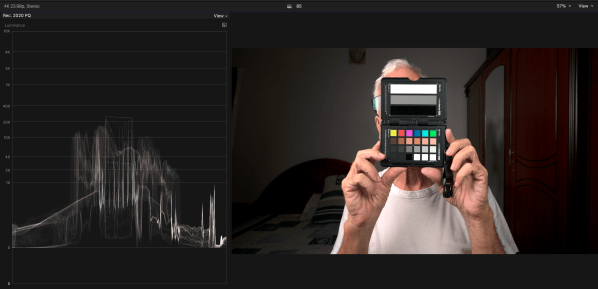
We put Gerald Undone's recommended exposure settings for S-Log3 to the test! He suggests setting C1 to Std+Range 55% for 18% gray, then using C2 Lower Limit 94+ to check for highlight clipping, resulting in an ETTR of +1.66. Previously, we just used the C2 setting by itself but often found it difficult to recover... Continue Reading →
Adjusting Exposure in Final Cut Pro
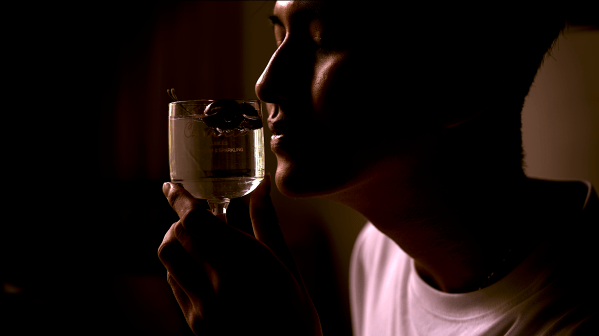
I was just in the middle of doing yet more tests to determine the very best zebra settings for the a7s III when I came across this - arguably the single most important step toward getting vibrant, contrasty, High Dynamic Range images in Final Cut Pro - adjusting exposure. Simply pulling shadows down till they... Continue Reading →
Upgrade to the 50mm f/1.2 GM?
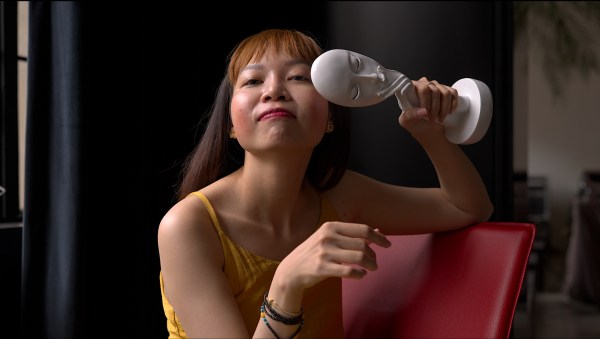
Buying the latest and greatest is seriously tempting, but is it really worthwhile? Going from the MeFoto RoadTrip to a Gitzo carbon fiber tripod; from the a7 III to the a7s III; from the Shogun Inferno to the Ninja V; and from the iPhone 7 to the iPhone 12 Pro Max: those were all substantial... Continue Reading →
 The Daejeon Chronicles