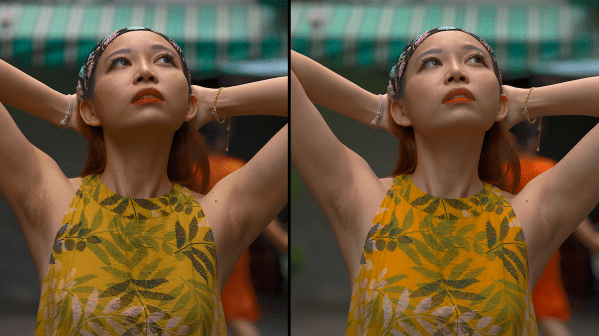
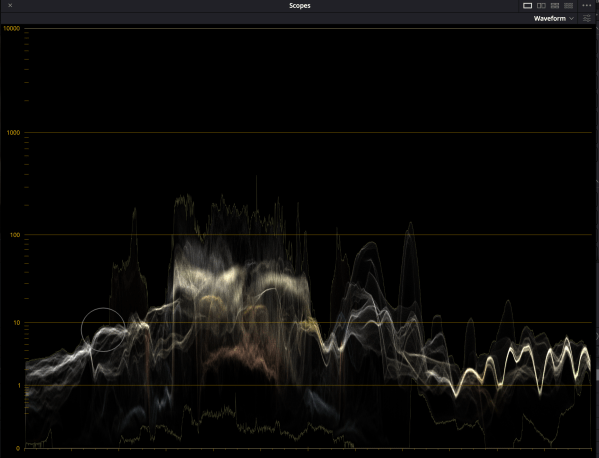
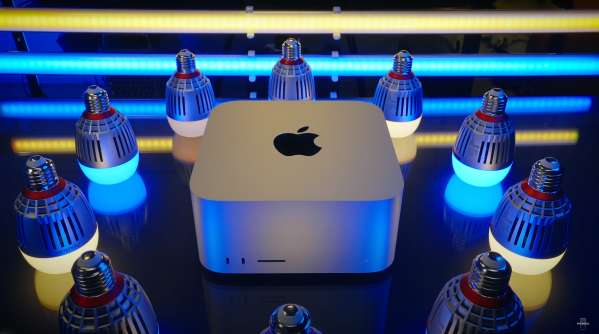
Not only does Faruk Korkmaz set the bar when it comes to gorgeous looking reviews, he also addresses our most pressing concern from the very start - which is how fast the computer can transcode footage to HEVC 10-bit in Apple Compressor. As it turns out, the Mac Studio finished the job around 80% faster... Continue Reading →
The Verge: Apple Studio Display A Confounding Miss
Good to see that SDR displays are finally being recognized as outdated tech by reputable reviewers. The Verge had this to say about Apple’s Studio Display: “The real issue is that $1,599 is a lot of money, and here, it’s buying you panel tech that is woefully behind the curve. Compared to Apple’s other displays... Continue Reading →
Venice 2 Rolling Shutter Crushes It
The German website Slashcam, currently testing the Venice 2, had nothing but superlatives for its rolling shutter performance, pronouncing it the very lowest they have ever measured for a non-global shutter, leaving the competition in the dust. “When measuring the rolling shutter reading times, Venice pushed us to our limits. Or to the limits of... Continue Reading →
HEVC Main10 vs. HEVC Main 4:2:2 10
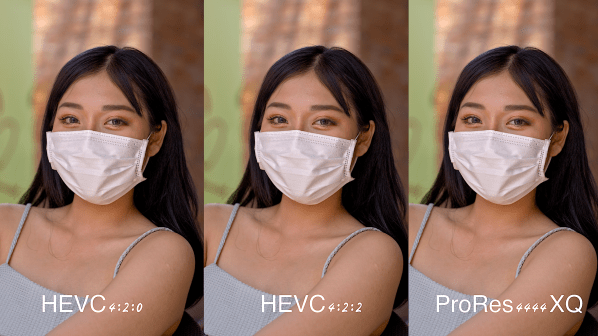
A little while back, we reported that Blackmagic Design had added support for HEVC 4:2:2 Main10 on Apple Silicon in DaVinci Resolve. What we didn't realize at the time was that the render page now had three selections for encoding HEVC: Main (8-bit), Main10 (10-bit 4:2:0) and Main 4:2:2 10. Using Invisor, an app brought... Continue Reading →
HDR Fallacies #3
Last year, we reached out to Atomos to ask why they didn’t upload more HDR content to their YouTube channel and they replied that not all projects are suited to HDR. Which is patently false: the video doesn’t exist whose image quality cannot be dramatically improved by mastering and uploading to YouTube in HDR.
Film Grain: Downloadable HDR Sample Footage
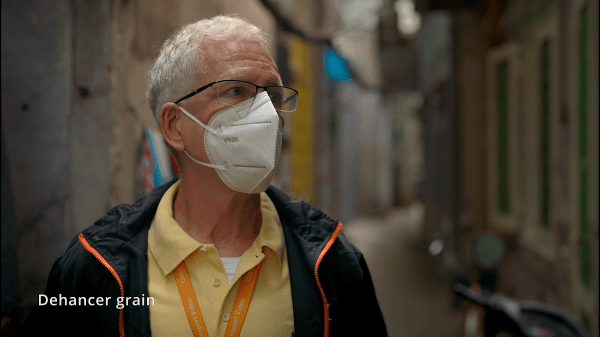
Video details: Sony a7s III, Sony FE 50mm f/1.2 GM, ProRes RAW, S-Gamut3.cine/S-Log3, ISO 640, f/2.8. Edited in DaVinci Resolve 17 Studio HDR Rec.2020 PQ (P3-D65 limited) using an LG 55CX and MacBook Pro (late 2021). https://youtu.be/zq4aY8KpqSg Grain adds texture to an otherwise squeaky clean, sterile digital image and, as HDR is rather unforgiving, is... Continue Reading →
Split-Toning
Split-toning is a characteristic of film stocks where you’ll see cool shadows and warm highlights adding color contrast to the image. This is accomplished by un-ganging the channels and adding a few pixels of blue and green to the shadows, a tiny bit of red and green to the highlights. Once you’ve made your adjustments... Continue Reading →
Kevin Shaw “HDR Doesn’t Affect Anybody”
"A few years back, a couple of years back, the consensus really was that HDR doesn't affect anybody: you don't have to shoot differently, you don't have to edit differently; it's really just an extra step in the grading. And I think over the last couple of years, we've really learned a lot and we're... Continue Reading →
Resolve Update Adds Support for HEVC 4:2:2 Main10 on Apple Silicon
DaVinci Resolve Studio 17.4.4 brings many enhancements, chief among them being support for encoding H.265 4:2:2 Main10 on Apple Silicon, the codec used to upload HDR video to YouTube and the most demanding operation on our M1 Max MacBook Pro with 32GB RAM. In order to determine exactly how much of an improvement the update... Continue Reading →
Back to Basics
We're not gonna lie - it's great to be able to just hook up the SSD from the Ninja V and start grading the RAW files immediately in Final Cut Pro with no transcoding. Apart from using it to white balance our shots, we've ditched the bad old ColorChecker altogether. Color charts are made for... Continue Reading →
Dynamic Range
"Please keep in mind that HDR is totally different than SDR. This starts with light setups for your scenes and it ends with differences in color grading, especially in color space, gamma and bit depth, to name just a few. Additionally it's important to know that you should use at least 10-bit and log footage.... Continue Reading →
Light Illusion CEO “Apple Display Unsuitable for Grading”
MacRumors shared news of a support document from Apple informing users that a warning symbol can appear on MacBook Pros with the Liquid Retina miniLED display if the screen becomes too hot, leading to the display being dimmed, a situation that can occur if the ambient temperature is high while watching bright content for extended periods... Continue Reading →
S-Gamut3 or S-Gamut3.Cine?
We've written extensively about the benefits of shooting RAW but once you've picked up your Ninja V, you might still be wondering which color space to use. For HDR acquisition, we recommend: Format ProRes RAW HQ or ProRes RAW Quantization 16-bit linear OETF S-Log3 Color Space S-Gamut3 or S-Gamut3.cine Dolby writes, "Where content is going... Continue Reading →
MacBook Pro Liquid Retina XDR Display Blooming
It's there, but it's much less pronounced than it was on the Asus ProArt PA32UCX and as usual, it looks worse from an angle than when viewed head-on.
Updated Post on Why You Should Be Shooting Raw
Readers are encouraged to check out our greatly expanded blog post outlining the many advantages of shooting RAW.
TCL Triggers Karen
The announcement by TCL, the world's second largest television manufacturer, of their intention to bring the TrueCut Motion platform to their TVs in North America, made Eugenia Loli’s pea-sized brain misfire, prompting her to blurt out: Seriously? Of the 2,700-odd movies produced worldwide each year, 99.99% are shot at 24 frames per second - yet... Continue Reading →
Sony a7s III Noise: Internal Codec vs. External
Both clips were shot at base ISO 640. The internal codec was XAVC S-I S-Log3/S-Gamut3, the external was ProRes RAW HQ via the Atomos Ninja V which was then transcoded to ProRes 4444 in Apple Compressor. Sony a7s III in-camera noise processing is splotchy and enlargement reveals unsightly banding artifacts, whereas the externally recorded footage... Continue Reading →
Sony a7s III Internal Codec vs. ProRes 4444: Round 2
We added sharpening to the XAVC S-I clip just to make it a little more challenging. Can you tell which is which? https://youtu.be/LvywZXFZkFA Sony a7s III XAVC S-I internal noise processing is splotchy and exhibits banding artifacts. ProRes 4444 noise reduction in post. Settings: Temporal - Faster - Medium -Luma 2 - Chroma 2. Noise... Continue Reading →
Canon R5 C or Canon C70?
It's easy to get bogged down when comparing all the features offered by Canon's cameras but the task becomes much simpler when approaching the question purely from the perspective of HDR, for which the camera must meet a minimum of three criteria: low noise, thirteen stops of dynamic range and offer raw recording (either internally... Continue Reading →