The video of Ha at the restaurant shot with the Komdo on the DJI RS3 Pro looked a bit shaky, so we might have a go at stabilizing the footage with Gyroflow and share the results. Since the trial version of Assimilate Player Pro Studio has unlocked CinemaDNG, we may test it out with some... Continue Reading →
Assimilate Player Pro Studio cDNG Update
Assimilate Player Pro Studio ProRes RAW to CinemaDNG is available for testing as of now. The app has made Nikolaj Pognerebko's overpriced RAW Convertor with limited functionality completely irrelevant.
HDR Panelist Calls Colorists Children
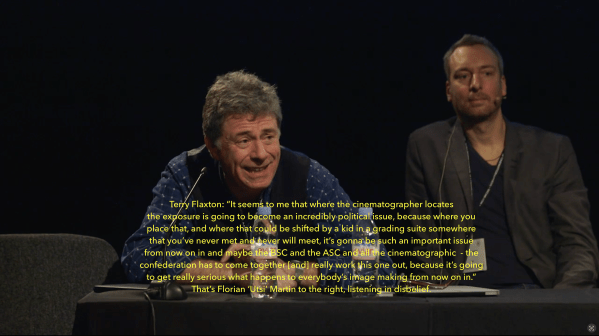
“It seems to me that where the cinematographer locates the exposure is going to bécome an incredibly political issue, because where you place that, and where that could be shifted by a kid in.a grading suite somewhere that you've never met and never will meet, it's gonna be such an important issue from now on... Continue Reading →
Great Joy 85mm T2.9 1.8X + RED Komodo (15 sec.)
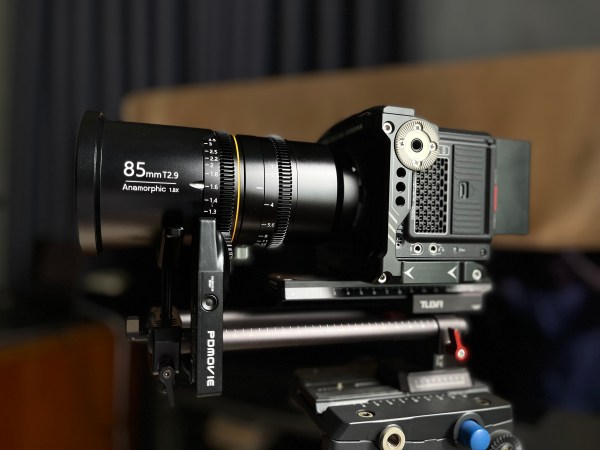
There are 30-minuteYouTube tutorials on de-squeezing and aspect ratios but it looks like it’s done automatically in Resolve. It automatically chose 1.8 pixel aspect ratio upon import! There's a link to the original footage in the video description for those who dislike YouTube compression as much as we do. https://youtu.be/LtgHhejy8Hw
RED Komodo 6K Footage
There's a link to the original movie in the description for those who dislike YouTube compression as much as we do. The clip was minimally graded (reduced exposure, removed green tint) in ACES, no noise reduction in post. https://youtu.be/2oO4wRRevkk
It is extremely rare to find anyone who is finishing only in SDR
In an interview with the editor of Film and Digital Times, Greg Smokler, Director of Cine for Creative Solutions, says that few productions are only finished in SDR nowadays. Creative Solutions is a subdivision of The Vitec Group and is comprised of Teradek, SmallHD, Wooden Camera and Lightstream. Jon Fauer: Do SmallHD customers ask more for... Continue Reading →
HDR Requires Larger LUTs
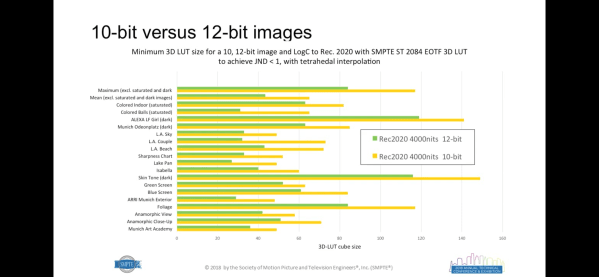
JD Vandenberg, Director of Post Production @ The Walt Disney Studios, found that 33X33X33 LUTs developed for SDR are too small for working with HDR footage. So what’s the minimum size 3D LUT required to minimize visual artifacts in PQ HDR content? Vandenberg’s study concluded that 10-bit material necessitates the use of LUTs that are... Continue Reading →
Just how common is highlight clipping in SDR content, anyhow?
Apparently, very common! According to the paper published by Michael Zink and Michael D. Smith, who analyzed hundreds of titles from the Warner Bros. catalogue in order to study outlier pixels, clipping is quite common in SDR, while its occurrence in HDR content is exceedingly rare. We should add that the SDR titles were in... Continue Reading →
Ganglands: Finally, A Commendable HDR Release
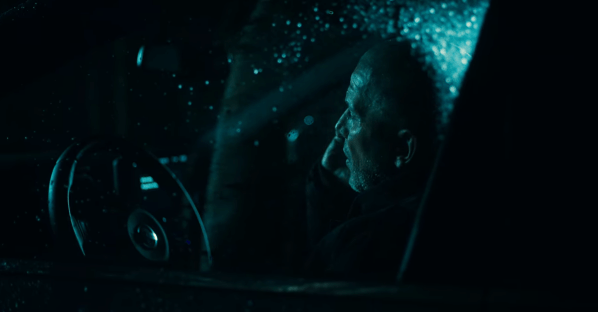
We love us some gritty French action crime drama, and Julien Leclercq's Ganglands (Netflix) doesn't disappoint. The HDR presentation is very effective but, like too many HDR shows, the blacks are crushed, which doesn't bother us at all in this series, but it might annoy some. In season 2, there are countless shots where the actors’ faces... Continue Reading →
At Last! A Metric To Describe The Color Volume Of WCG Displays
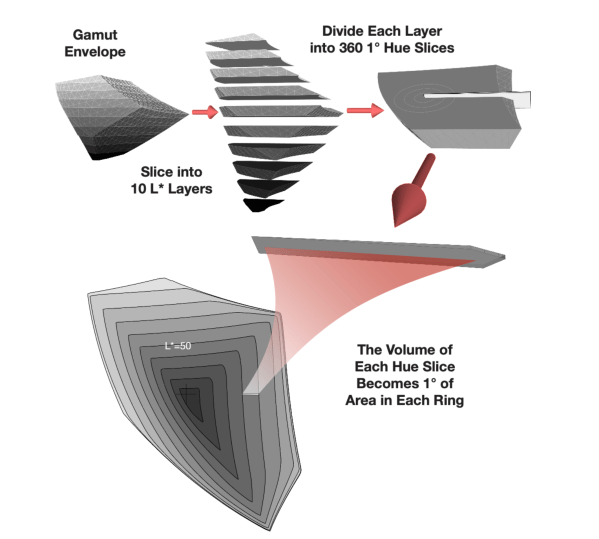
Since the ICDM has unequivocally endorsed gamut rings and the CIELAB color gamut volume for display measurement, it is hoped that we will see more meaningful comparisons of the actual color volume between different displays in the future, as current methods are meaningless for today's televisions, monitors, tablets, phones and laptops. From the Information Display... Continue Reading →
BBC: 12 Stops Required for HDR Programs
From the BBC Academy Guide: “The content needs to be captured in UHD. Specifically this means: • using a camera and lens that can deliver a resolution of 3840 x 2160 pixels • capturing at least 12 stops of dynamic range If you’re making a live BBC programme you’ll need a camera that outputs hybrid... Continue Reading →
HLG’s Lack of Saturation “Not Very Commercially Compelling”
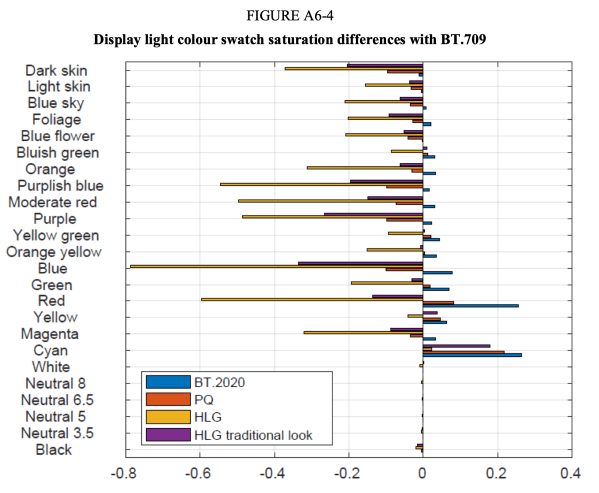
https://youtu.be/1r56JCpIMIs?si=H802qIF7v5mGGRsL https://youtu.be/YzVz4nxaT60?si=Xwz8DwVST2e5C0H4 The HLG format, by design, has the lowest saturation of all formats because it preserves the chromaticity of the scene as imaged by the camera; all other formats increase saturation compared to the scene as imaged by the camera. Earlier studies have shown that colorimetrically accurate reproduction of natural scenes does not necessarily... Continue Reading →
How To Avoid Outliers In HDR Static Content Metadata
It's definitely advisable to embed static metadata in your HDR10 videos, but doing so can actually end up making the picture worse on the viewing end if care is not taken to avoid outlier pixels - pixels that are unintended that fool the consumer's display, resulting in a dimmer image. Why don't current methods for... Continue Reading →
You Don’t Want BT.2020
"To be honest, the full gamut of 2020, I don't think we're ever going to see it. 95% of the Pointer's gamut, which covers most of the naturally reflected colors in nature - trees, fruits, skin tones and everything - it's about P3, it's slightly larger than P3. Those primaries of 2020 gamut and with... Continue Reading →
Financial Review: Atomos settled sexual harassment suit, made staff ‘drugs mule’
According to reporting by the Financial Review, employees at Atomos confirmed the existence of a drug culture at the tech company, writing: "Atomos agreed to pay out $60,000 to a staff member who alleged a former employee sexually harassed her and expected her to make cocaine and cannabis available to staff, amplifying the troubled tech... Continue Reading →
Jarred Land Announces KOMODO Monochrome
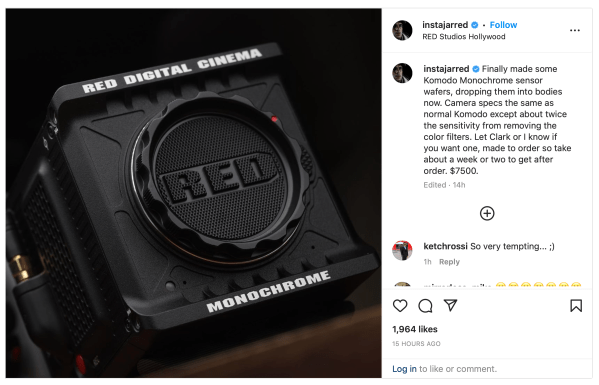
On his Instagram page, Jarred Land announced the long awaited KOMODO Monochrome. The s35 6K camera has around double the sensitivity of the original Komodo and should be able to record as much as 20% more detail. With the traditional Bayer pattern color filter array (CFA) found in most cinema cameras, each pixel captures only... Continue Reading →
DCI: Colorists Have An Aversion To Colors Beyond P3
When the DCI (Digital Cinema Initiatives), a joint venture of Disney, Paramount, Sony Pictures Entertainment, Universal and Warner Bros. Studios, published its recommendations for next-gen HDR theatrical presentation in High Dynamic Range D-Cinema Addendum Version 1.0, a black level of 0.005 cd/m2 and peak brightness of 300 cd/m2, for an overall contrast ratio of 60000:1,... Continue Reading →
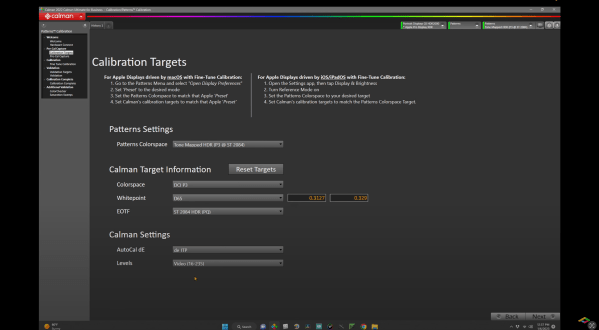
Pick Up Free Exposure Chart DCTL For 18% Middle Gray
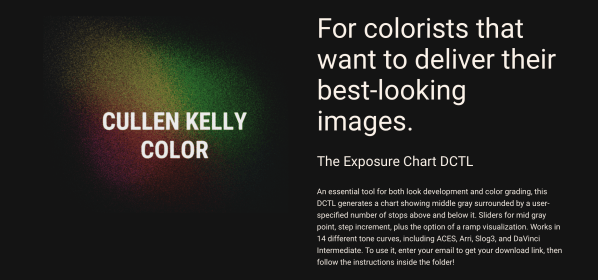
Cullen Kelly's free chart includes 14 different tone curves, including ACES, Arri, Slog3, Log3G10 and DaVinci Intermediate. And here's a tutorial on how to use the exposure chart.
Is A Camera With 10 Stops Of Dynamic Range HDR?
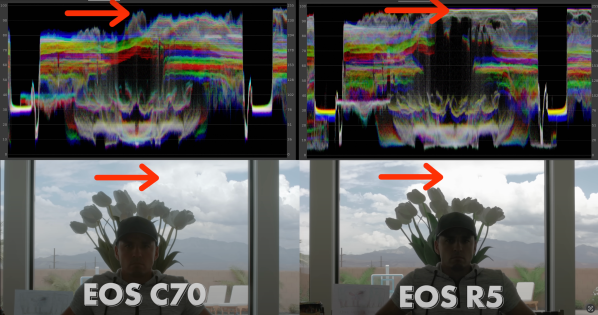
Standards for HDR have been established by various industry organizations for displays but as yet, no similar initiative has been undertaken in the camera industry, though manufacturers almost without exception make exaggerated claims for the dynamic range of their cameras. It is said that photochemical film is capable of 13+ stops, though this varies greatly... Continue Reading →

