https://youtu.be/uEcmBKzWbp4 Here's the workflow for those who are interested. https://daejeonchronicles.com/2022/11/14/josh-pines-sony-venice-lut-with-red-ipp2/
Sony Venice 2 LUT + Komodo Extended Ver.
The number one resource for information about HDR technology, workflows, tutorials, news and opinion.
https://youtu.be/uEcmBKzWbp4 Here's the workflow for those who are interested. https://daejeonchronicles.com/2022/11/14/josh-pines-sony-venice-lut-with-red-ipp2/
https://youtu.be/qUDhKYTAKlo Look 1, developed by Picture Shop Senior Colorist Jason Fabbro (Captain Marvel, Thor:Ragnorak, Ready Player One) was created using the Lo Con Base LUT and offers slightly more contrast and saturation, while the reds and highlights have been pulled down to look less digital. Download the original movie here. Four of the new custom... Continue Reading →

1. The ability to monitor in both SDR and HDR without baking in the look. "The first ALEXA, now known as ALEXA Classic, introduced in 2010, and all successive ALEXAs (as well as AMIRA) provided a LUT-based output transform for REC709, which allowed for SDR (Standard Dynamic Range) monitoring of a default rendering of the camera’s... Continue Reading →
Michael Zink and Michael Smith received the Journal Certificate of Merit for their paper "On the Calculation and Usage of HDR Static Content Metadata,” published in the SMPTE Motion Imaging Journal in August 2021. After analyzing over 200 titles from Warner Brothers' catalogue, they proposed a method for calculating the static metada for HDR10 content... Continue Reading →
When Dolby conducted a study of viewer preferences for luminance levels of specular highlights and emissive sources to determine the dynamic range needed to display HDR content, it was found that the average preferred maximum luminance for highlight reproduction satisfying 50% of viewers is ∼2,500 cd/m2, increasing to just over 20,000 cd/m2 when catering to... Continue Reading →
Accuracy is important, very important. Whether creating or consuming content having an accurate image ensure’s the artist’s intent is as intended. Photography, Visual Effects, Editing, Color Grading, Web Surfing, ect. Color makes a difference. Patterns™ is designed to test the system, not just the display. The app is designed to work in the color spaces... Continue Reading →

For the past six months, we’ve been uploading Rec.2020 ST2084 (P3-D65 Limited) videos to YouTube, but it appears that many are still operating under the assumption that Rec.2020 videos constrained to P3 should not be uploaded to the video sharing platform. In order to settle this question once and for all, we recorded a billboard... Continue Reading →
We've made a few more changes to the RED Komodo post-workflow, including adding Rec.2020 ST2084 (P3-D65 Limited) for those working with a display calibrated to P3-D65, such as the MBP (2021). From the DaVinci Resolve user manual: Gamut Limiter Lets you limit the gamut to a specified standard. Useful in situations where the delivery color... Continue Reading →
A cosplay video by YouTuber Flannel Ninja that most assuredly takes advantage of HDR’s extended color palette and brightness, shot with the Canon EOS R5 C and quite possibly graded on an LG OLED. NSFW https://youtu.be/UBCq1gOlSkc YouTubers have an advantage over multi-million dollar productions in that they don’t have an executive producer looking over their... Continue Reading →
Online video tutorials can give the impression that shooting at anything but base ISO is somehow detrimental to image quality; and tests evaluating underexposure latitude in post are almost without exception done in SDR. However, because so much of HDR’s dynamic range is located in the shadows where noise tends to be most prevalent, and... Continue Reading →

The Mission is a 17-minute short film, carefully crafted by ASC cinematographers and associate members, image scientists, colorists, manufacturers and technologists to provide a cinematic and diverse piece of media that may be freely used to test theatrical projection, theatrical emissive displays, professional monitors, consumer monitors and post production image processing software and hardware. American Society... Continue Reading →
Ben Allan, ACS hosted a video on YouTube entitled HDR: A Cinematographer’s Perspective which documents the ACS Technology Committee performing an HDR test shoot with the support of Lumen Arty Film Studios, Panavision, Sony and Cutting Edge Post. They invited Toby Oliver, ACS (Day Shift) to light and shoot some example scenes and to monitor... Continue Reading →
Google is in talks with manufacturers seeking royalty-free alternatives to Dolby Vision and Dolby Atmos. TV manufacturers must currently pay licensing fees ranging from $2.00-$3.00 per device for Dolby Vision. Meanwhile, Samsung’s own alternative to Dolby Vision, HDR10+, has not gained much traction. In addition to greater bit depth (12 bits vs. 10 bits), higher... Continue Reading →

The Arri Alexa 35 set a new benchmark for dynamic range in 2022, measuring just over 15 stops according to Xyla/Imatest. How does this compare to cinema cameras of yesteryear? In High Dynamic Range Video: Concepts, Technologies and Applications, (2017) the authors published the results of various cameras, including the Arri Alexa Classic, the RED Epic,... Continue Reading →
This document published by the HDR4EU project, a group of representatives from ARRI (camera manufacturer), Filmlight (post-production software developer), Smoke & Mirrors (post-production company), Brainstorm (broadcast software developer), Barco (display manufacturer), and Universitat Pompeu Fabra (computer graphics and image processing academic group) who got together to come up with guidelines for HDR production, has some... Continue Reading →

Conundrum. The chart plots judder equivalence vs. luminance for various panning speeds, demonstrating how motion artifacts like judder are exacerbated when shooting high contrast images in HDR, the takeaway being to pan more slowly if you intend to deliver in HDR. At the same time, because of their nearly instantaneous response times, OLED panels are... Continue Reading →

The clip incorporates many of the techniques discussed in our Monster guide - the most comprehensive and up-to-date free resource on the Internet for HDR10 workflows in DaVinci Resolve Studio 18 that shows how to use false color to nail exposure every time; how to use HSL to selectively target problematic areas for the best... Continue Reading →
Don't let the thumbnail deceive you - you can see our bouncy gimbal work in the video. This was only the second time we’ve bothered to calibrate the sensor before a shoot. Up next - trying to figure out a workable follow focus solution for the set of Meike lenses. https://youtu.be/xKzpW0ctQdw
Cullen Kelly will be hosting a free training session with Blackmagic Design entitled‘Exploring HDR & Dolby Vision with DaVinci Resolve’Aug 18, 2022 10:00 AMPacific Time (US and Canada)This “ watch & learn” session will teach you how to create and deliver a finished Dolby Vision Master from Resolve 18! Register now at https://us02web.zoom.us/webinar/register/WN_Q6k-gU7MSjm-woSNvoXmEQ Agenda items... Continue Reading →
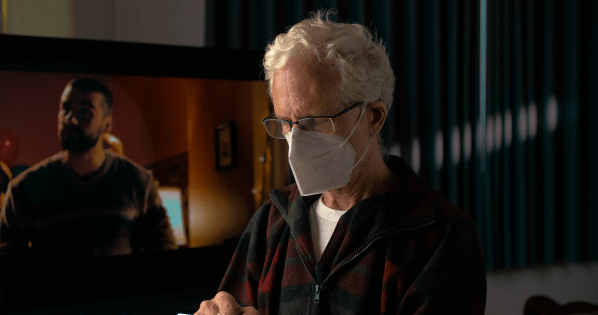
Note: The video should be watched in a pitch-dark room. HDR is supposed to be graded in an environment with ambient lighting at 5 nits, which might help to explain why so many complain about HDR being so dark. Unlike SDR, the PQ curve is absolute, meaning that, unlike SDR, the image can't be made... Continue Reading →
 The Daejeon Chronicles