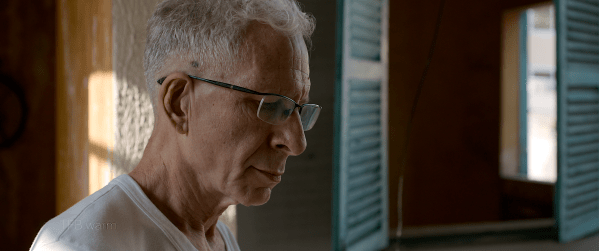
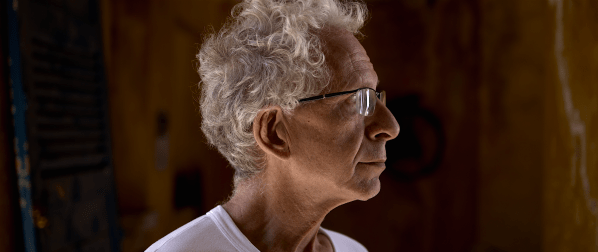
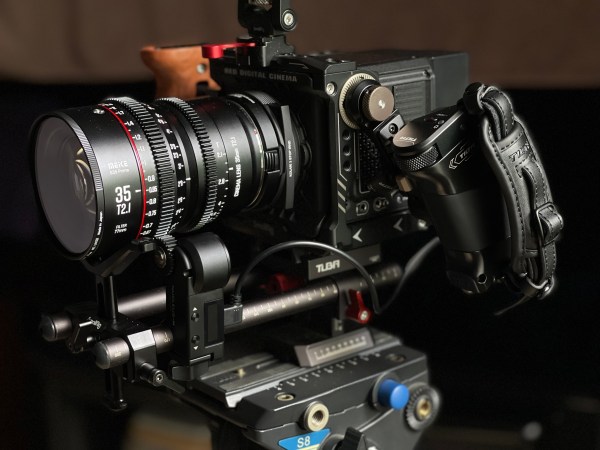
In this clip, we try out just a handful of the over 540 LUTs included in Phil Holland's philmColor R3 LUT pack. There is a link to the downloadable movie in the description for those who can't stand YouTube compression. https://youtu.be/Z53zdkSf1gQ
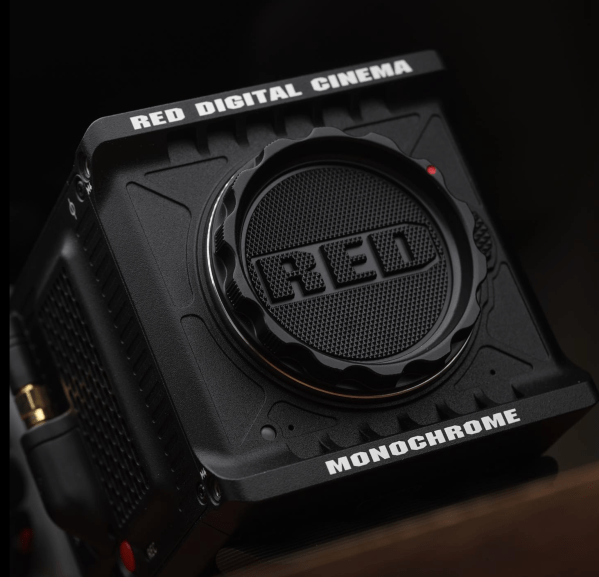
RED to Unveil Monochrome Komodo in 2023?
During a livestream a couple of years ago with some of the very first filmmakers to get their hands on the RED Komodo, Jarred Land announced that a monochrome Komodo was absolutely on the road map. Now that the V-Raptor, V-Raptor XL and Rhino are all in production, can we expect a Komodochrome in 2023?... Continue Reading →
Sony Venice 2 LUT + Komodo Extended Ver.
https://youtu.be/uEcmBKzWbp4 Here's the workflow for those who are interested. https://daejeonchronicles.com/2022/11/14/josh-pines-sony-venice-lut-with-red-ipp2/
Josh Pines’ Sony Venice LUT With RED IPP2
https://youtu.be/qUDhKYTAKlo Look 1, developed by Picture Shop Senior Colorist Jason Fabbro (Captain Marvel, Thor:Ragnorak, Ready Player One) was created using the Lo Con Base LUT and offers slightly more contrast and saturation, while the reds and highlights have been pulled down to look less digital. Download the original movie here. Four of the new custom... Continue Reading →
Comparison: RED Komodo R3D HQ vs LQ
Regarding the HQ, MQ and LQ settings on the RED Komodo, Jarred Land had this to say: The only reason you should select low quality is [...] to record for a very long time [or] because you have a limited amount of cards [...]. The medium shouldn't even really be there, but you know, people... Continue Reading →
A Few More Changes to Komodo Post Workflow
We've made a few more changes to the RED Komodo post-workflow, including adding Rec.2020 ST2084 (P3-D65 Limited) for those working with a display calibrated to P3-D65, such as the MBP (2021). From the DaVinci Resolve user manual: Gamut Limiter Lets you limit the gamut to a specified standard. Useful in situations where the delivery color... Continue Reading →
Updated RED Komodo Post Workflow
RCM was doing strange things to Red Komodo footage, including making letterboxing and titles gray rather than black so we’ve gone ahead and updated it to a node based transform workflow.
RED Face Detect AF Shows Promise!
We gave the face detect AF feature on the RED Control app another shot this afternoon, and it surpassed our expectations! In order to work properly, at least until face tracking is enabled in the Komodo with the next firmware update in December, it’s necessary to focus first, then select Face Detect in the app.... Continue Reading →
How Responsive is RED Komodo Face Detect AF?
Shot with the Canon RF 35mm f/1.8 macro. https://youtu.be/NJuloCLCTLY
RED Komodo Face Detect Autofocus Is Here!
It looks like Face Detect AF is on the horizon for the RED Komodo, probably with a firmware update in December. Meanwhile, it's available through the Red Control App. The free version of the RED Control App now offers Face Detect AF and it works with the RED Komodo. The feature will not work without... Continue Reading →
RED Komodo Noise Comparison
Just a quick comparison between 6K and 6K on a 4K timeline, ISO 640. You'll probably have to crank up the brightness and inspect in a darkened room.
RED Komodo: ISO 250 vs. ISO 800
Shooting at ISO 250 with RED results in more visible shades (stops of latitude) in the shadows and less noise (though we're hard-pressed to see the difference in the screenshots), but also considerably less highlight protection. Both screen grabs are from clips that have been exposed as much as possible without highlight clipping. You can... Continue Reading →
Footnote to RED Komodo: Returning to ETTR!
In ‘Cinematography: Theory & Practice’ Blain Brown writes, “RAW, in this context, is an absolute scale based on the output of the sensor. It is not necessarily related to the viewing image in terms of brightness values. […] This is, of course, the basic concept of shooting RAW vs. shooting video that is more or... Continue Reading →
RED Komodo: Returning to ETTR!
After going back and forth, we've finally decided to stick with ETTR once and for all. No more false color overlays, just the histogram and traffic lights (increasing exposure until the lights turn on, then dialing back until they just turn off). As long as the traffic lights are off, there won't be any clipping... Continue Reading →
Why RED 2
With his latest sensational video, where he responds to critics of RED’s color science, dynamic range and resolution, Mark Toia has incredibly surpassed all of his earlier endorsements for RED and created a remarkably powerful showreel all at once. https://youtu.be/_WoTZ-DnlmM
RED Komodo Grade Reveal
The clip incorporates many of the techniques discussed in our Monster guide - the most comprehensive and up-to-date free resource on the Internet for HDR10 workflows in DaVinci Resolve Studio 18 that shows how to use false color to nail exposure every time; how to use HSL to selectively target problematic areas for the best... Continue Reading →
Anna
Don't let the thumbnail deceive you - you can see our bouncy gimbal work in the video. This was only the second time we’ve bothered to calibrate the sensor before a shoot. Up next - trying to figure out a workable follow focus solution for the set of Meike lenses. https://youtu.be/xKzpW0ctQdw
Komodos Galore on Netflix Action-Comedy
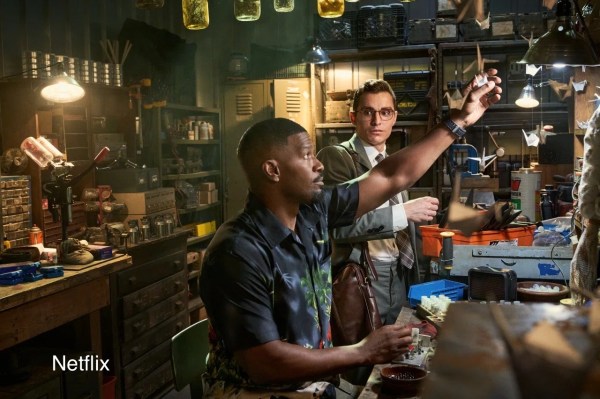
“Some days on Day Shift we deployed four RED MONSTROS and 10 KOMODOs plus. For scenes with pyrotechnics, we’d add more KOMODOs. Sometimes we rolled 20 cameras.” - DP Toby Oliver on Netflix vampire flick “Day Shift” Not something we're interested in watching, but you can read more from Oliver here.
Create Color Separation & Textural Depth in DR18
Note: The video should be watched in a pitch-dark room. HDR is supposed to be graded in an environment with ambient lighting at 5 nits, which might help to explain why so many complain about HDR being so dark. Unlike SDR, the PQ curve is absolute, meaning that, unlike SDR, the image can't be made... Continue Reading →