Chasing middle gray

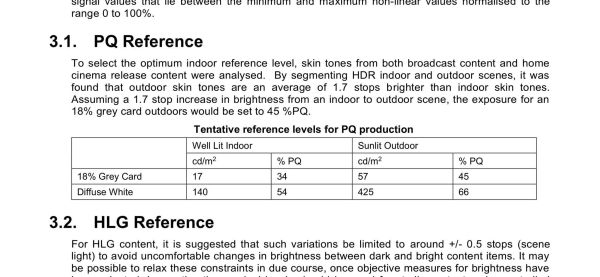
“We’re no longer exposing for middle gray and letting the rest “roll off.” […] Through all of these techniques, it’s important to recognize that our old friend and exposure aid, middle (18%) gray, will be of limited usefulness, as middle gray will shift with the audience’s adaptation to brightness changes. It may be possible for... Continue Reading →

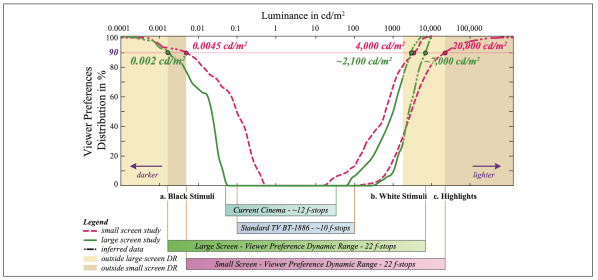
A Cinema Luminance Range by the People, for the People: Viewer Preferences on Luminance Limits for a Large-Screen Environment, by Suzanne Farrell, Timo Kunkel, and Scott Daly

A number of websites have published the findings of Dolby's study of luminance preferences for the small screen, yet they all but ignore the fact that Dolby also conducted a similar study with a large screen. Many assume that the larger screen in a movie theater only needs a fraction of the luminance of a... Continue Reading →

ETTR Is Not Overexposure

At the very end of his article on why S-Log3 no longer needs to be exposed to the right with Sony’s current generation of sensors, Alister Chapman makes a great point: “And one last thing: I don’t like the use of the term “over exposing” to describe shooting a bit brighter to help eliminate noise.... Continue Reading →

Coming Soon!

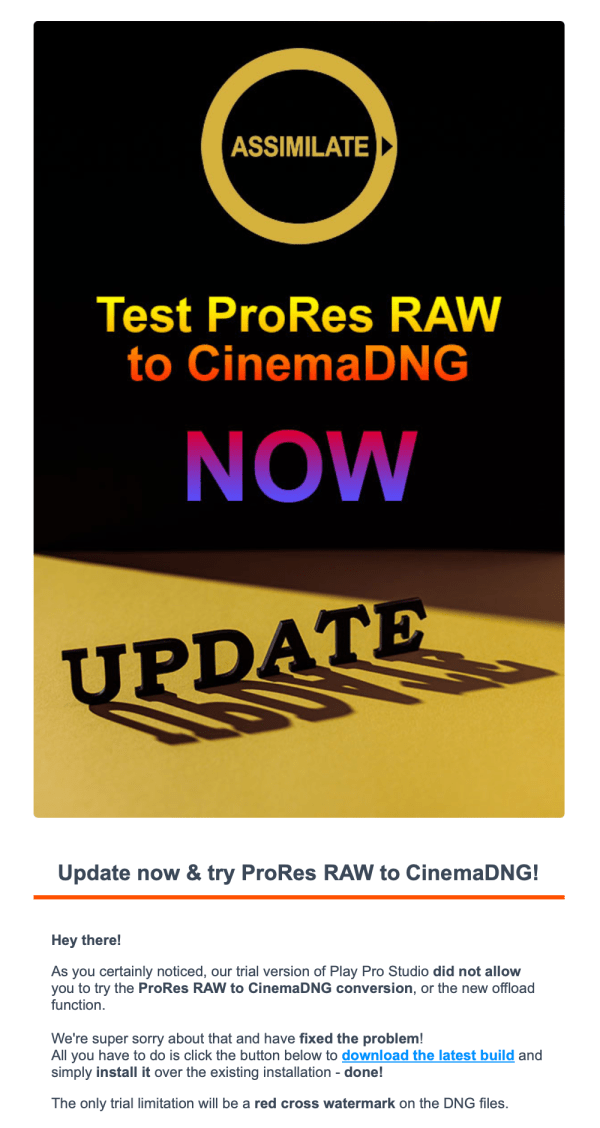
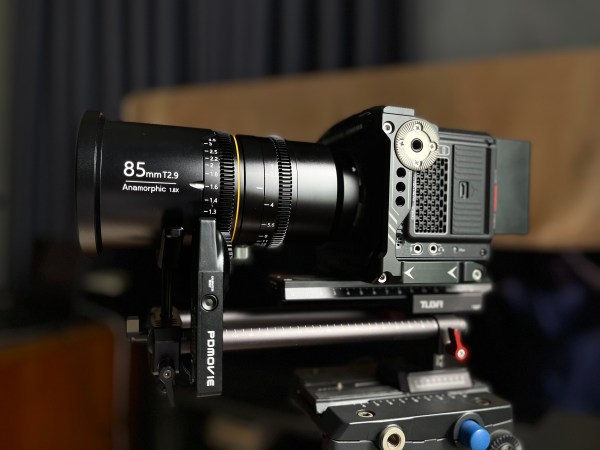
The video of Ha at the restaurant shot with the Komdo on the DJI RS3 Pro looked a bit shaky, so we might have a go at stabilizing the footage with Gyroflow and share the results. Since the trial version of Assimilate Player Pro Studio has unlocked CinemaDNG, we may test it out with some... Continue Reading →

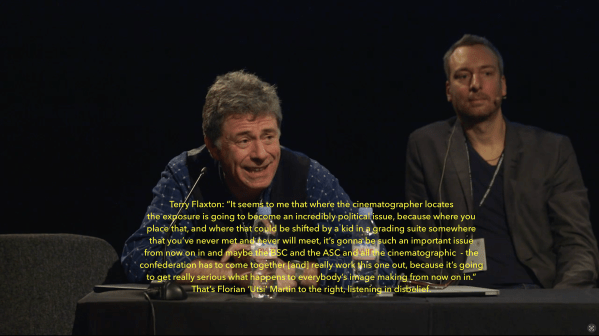
HDR Panelist Calls Colorists Children

“It seems to me that where the cinematographer locates the exposure is going to bécome an incredibly political issue, because where you place that, and where that could be shifted by a kid in.a grading suite somewhere that you've never met and never will meet, it's gonna be such an important issue from now on... Continue Reading →

HDR Requires Larger LUTs

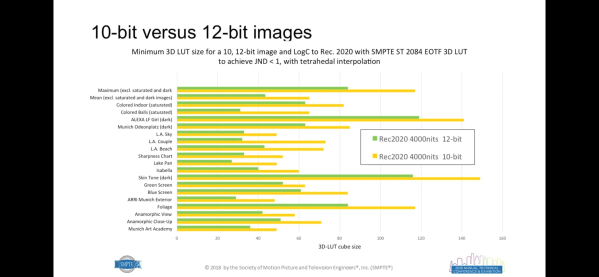
JD Vandenberg, Director of Post Production @ The Walt Disney Studios, found that 33X33X33 LUTs developed for SDR are too small for working with HDR footage. So what’s the minimum size 3D LUT required to minimize visual artifacts in PQ HDR content? Vandenberg’s study concluded that 10-bit material necessitates the use of LUTs that are... Continue Reading →

Ganglands: Finally, A Commendable HDR Release

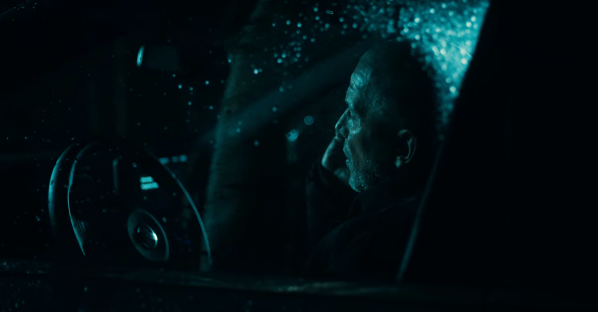
We love us some gritty French action crime drama, and Julien Leclercq's Ganglands (Netflix) doesn't disappoint. The HDR presentation is very effective but, like too many HDR shows, the blacks are crushed, which doesn't bother us at all in this series, but it might annoy some. In season 2, there are countless shots where the actors’ faces... Continue Reading →

HLG’s Lack of Saturation “Not Very Commercially Compelling”

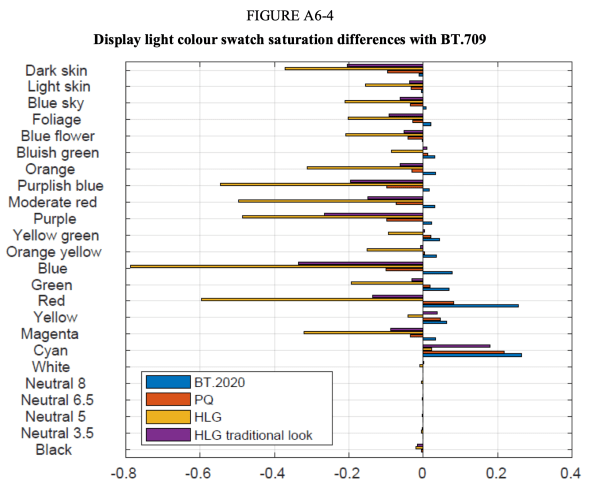
https://youtu.be/1r56JCpIMIs?si=H802qIF7v5mGGRsL https://youtu.be/YzVz4nxaT60?si=Xwz8DwVST2e5C0H4 The HLG format, by design, has the lowest saturation of all formats because it preserves the chromaticity of the scene as imaged by the camera; all other formats increase saturation compared to the scene as imaged by the camera. Earlier studies have shown that colorimetrically accurate reproduction of natural scenes does not necessarily... Continue Reading →

You Don’t Want BT.2020

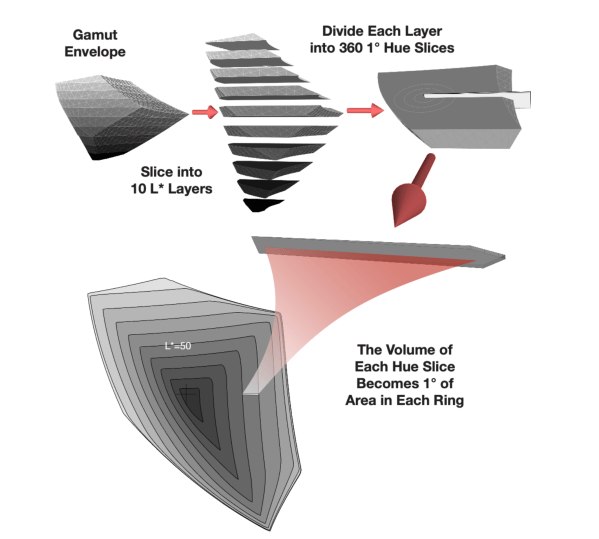
"To be honest, the full gamut of 2020, I don't think we're ever going to see it. 95% of the Pointer's gamut, which covers most of the naturally reflected colors in nature - trees, fruits, skin tones and everything - it's about P3, it's slightly larger than P3. Those primaries of 2020 gamut and with... Continue Reading →

Jarred Land Announces KOMODO Monochrome

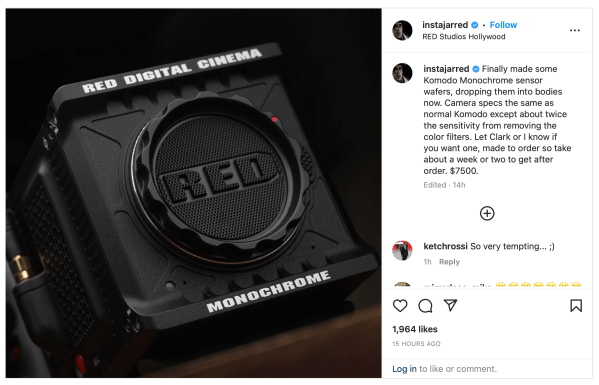
On his Instagram page, Jarred Land announced the long awaited KOMODO Monochrome. The s35 6K camera has around double the sensitivity of the original Komodo and should be able to record as much as 20% more detail. With the traditional Bayer pattern color filter array (CFA) found in most cinema cameras, each pixel captures only... Continue Reading →

Blog at WordPress.com.

Up ↑