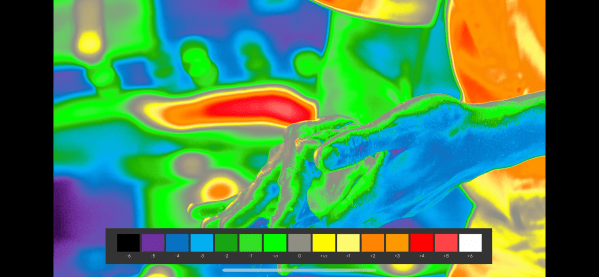
Sony's Cine EI - just like ARRI, Canon, Panavision, Blackmagic, RED, Kinefinity and every other cinema camera manufacturer's EI - allows you to prioritize shadows or highlights by allocating more stops of dynamic range, or latitude, above or below middle gray, and letting the photographer preview its effect using monitor LUTs, giving an indication of... Continue Reading →
Increase Saturation Like a Pro
Ever notice how increasing the saturation of your footage just makes it look more video-ish? Instead of using the saturation knob to increase saturation, how about trying out this method instead: 1. Add a node, right click > Color Space > HSV. 2. Right click again, > Channels > Channel 1 (uncheck). Right click again... Continue Reading →
FX3 Netflix Approved
As a result of massive firmware update 2.00 that enables timecode, Cine EI and a number of other noteworthy improvements, the FX3 has joined the coveted list of Netflix Approved cameras. This is the first time we recall seeing the Ninja V mentioned in connection with a Netflix Production Guide, meaning that recording ProRes RAW... Continue Reading →
A Must-Listen: Cullen Kelly Talks About PFE
To the best of our knowledge, the brilliant Cullen Kelly is the only colorist who consistently addresses film emulation and the implications of HDR WCG. https://daejeonchronicles.com/2022/01/05/cullen-kelly-disentangles-pfe-befuddlement/
Create Color Separation & Textural Depth in DR18
Note: The video should be watched in a pitch-dark room. HDR is supposed to be graded in an environment with ambient lighting at 5 nits, which might help to explain why so many complain about HDR being so dark. Unlike SDR, the PQ curve is absolute, meaning that, unlike SDR, the image can't be made... Continue Reading →
RED Komodo Noise Revisited
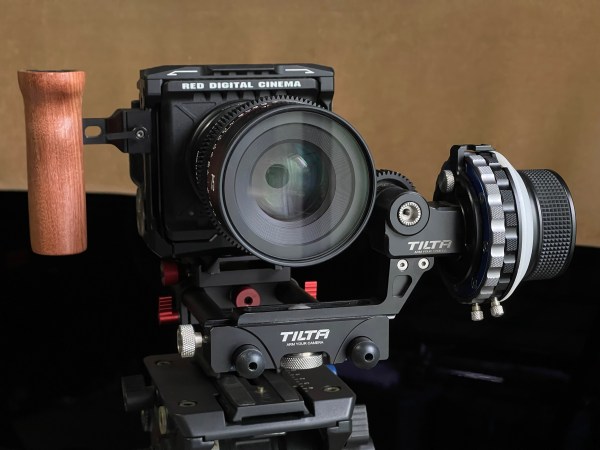
No, you're not having flashbacks, we've covered this before. But since we were testing out our shiny new Meike T2.1 50mm s35 prime, we thought we'd take the Komodo's auto WB for another spin. And just like our other footage where we dialed in our own Kelvin, it looks like there is indeed an unmistakable... Continue Reading →
RED: How ISO Works
Clarity and conciseness are such rare commodities these days! Nowhere has this been more evident than in the deluge of muddled videos cluttering YouTube since the release of firmware update 2.00 that adds Cine EI to the Sony FX3. Whenever possible, when searching for reliable information, it’s usually preferable to go straight to the source,... Continue Reading →
As Easy as Using an iPhone
It's so liberating to be able to view the false color guides and histogram, adjust white balance, ISO and aperture, pull focus, change the aspect ratio and frame rate and format media - all with an iPhone.
RED Komodo at ISO 250
Because of its higher contrast, noise is much more visible in HDR - a fact ignored by camera reviewers - and what may be acceptable in SDR might very well turn out to be unsatisfactory when mastering in PQ ST 2084. CVP shoots their B-roll with the Komodo set to ISO 250 for the cleanest... Continue Reading →
You can’t roll back Sony camera firmware to an earlier version once it’s been updated. The new firmware is permanent, and the update process overwrites the previous version, making a rollback impossible. This person is trolling.
Cine EI in a Nutshell
Since Sony firmware update 2.00 for the FX3, a bunch of videos have popped up on YouTube trying to explain how Cine EI works but most miss the mark. Alister Chapman has written a virtual encyclopedia on the subject but it will make your eyes glaze over before you lapse into a permanent coma. Hopefully,... Continue Reading →
Canon Rids R5 of Fake Overheating Restriction Without Fanfare
Seldom has a camera elicited as much controversy as did Canon’s EOS R5 and its overheating debacle. At the time, we were even compelled to call out DPReview's shameless defense of Canon, a shoddy piece of journalism which DPR technical editor Richard Butler has since retracted. Since the latest update, users are reporting being able... Continue Reading →
Best Budget Rear ND Solution for the RED Komodo?
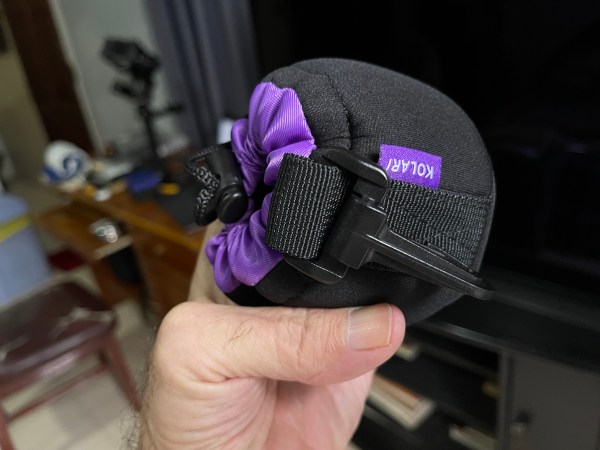
After poring over dozens of reviews and watching countless comparisons on YouTube, we think we’ve finally landed upon an ND filter adapter and drop-in filter system that (1) is compatible with the RED Komodo; (2) whose solid NDs have remarkably neutral color rendition; and (3) that won’t break the bank. Kolari is asking $224.99 for... Continue Reading →
Origins of the Skin Tone Line
The original purpose of what we now refer to as the skin tone line on the vectorscope had nothing at all to do with the color of flesh tones. Alexis van Hurkman explains.
The Spin Machine in Action
We've gathered together a bunch of titles of some of the most popular YouTube reviews of the Sony a7s III and the RED Komodo for your reading enjoyment. A suspiciously high number of a7s III reviews include the word 'perfect' while most of the Komodo ones concentrate on price, often vastly exaggerating the true cost... Continue Reading →
“I Guess It Wasn’t for You in the First Place”
We're seeing this idiotic refrain echoed over and over again in the comments sections of YouTube camera reviews and in online forums in reply to those for whom image quality is paramount and who recognize the value of objective testing, the most recent instance being CineD's lab test of the Canon EOS R5 C -... Continue Reading →
How Improper WB Hurts DR
We were aware that shooting with the incorrect white balance reduces dynamic range, but we never understood why this is so - until now. For those thinking that this doesn’t apply to raw video, we highly recommend checking out the heated exchange in the comments section of Alister Chapman’s blog post on the subject.
More Komodo Footage
https://youtu.be/XjzeBIt9gLo The video is best watched on an OLED TV. It was shot at 6K 2.4:1, 50 FPS in R3D LQ. RED raw files are a joy to grade, the color and texture of the image are like nothing we've ever experienced. The Canon 35mm macro is a crispy little bugger with pleasant enough rendition... Continue Reading →
RIP Sony a7s III
https://youtu.be/k3TWqb6LYTY It doesn’t appear to be getting the attention it deserves, but Sony’s firmware update 2.00 for the FX3, their popular entry-level cinema camera, just rendered the a7s III obsolete. In an effort to better integrate the the FX3 with the rest of their cinema lineup that includes the FX6, FX9 and Sony Venice cameras,... Continue Reading →
Motion Cadence Is BS
Over the years, in the comments section of YouTube sample footage videos, we continue to run across viewers claiming the motion cadence of camera X, Y or Z isn’t cinematic. Motion cadence is a BS term - it has no meaning whatsover. Which is not to say that there aren’t factors that impact our perception... Continue Reading →