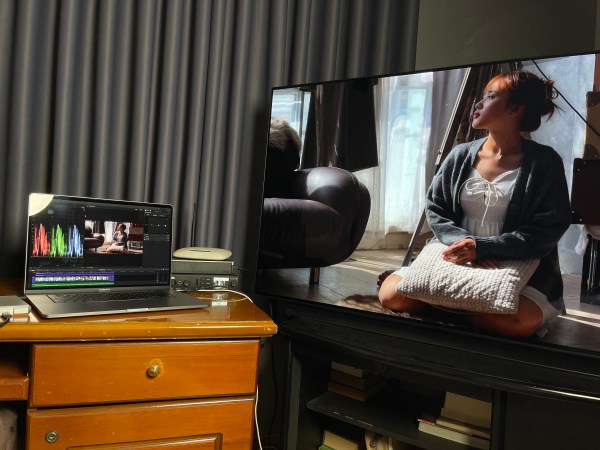
Part I: Project settings, Project Render Settings, Generate MaxCLL and MaxFall HDR10 Metadata Part II: RAW Part III: The Grade Part IV: Why HDR Production Monitors Matter Note: The information in this guide is continually revised and expanded and the reader is urged to check back occasionally for updates. The current recommendations are valid as of macOS... Continue Reading →
Calibration Obsession
If I want accurate colors from my a7s III, I shoot the X-Rite ColorChecker Passport Video, and in post, (1) I pull diffuse white down to 200 nits; (2) white balance using the white, grey and black chips, color curves and RGB overlay; (3) correct colors using the color chips, vectorscope and hue vs. hue;... Continue Reading →
HDR: The Single Most Overlooked Aspect
There have been countless videos and articles explaining what high dynamic range is, with nearly all focusing on the technical aspects: acquisition requirements (e.g. frame rates, resolution, bit depth, color gamut, dynamic range and so forth), followed by reviews of consumer televisions (measurements of screen uniformity, peak brightness, color accuracy, etc.) and more recently, tests... Continue Reading →
HDR Reference White
The ITU-R BT.2408 document describes a reference (i.e. diffuse) white level for HDR content of 203 nits. It might seem logical therefore to render SDR content at 203 nits peak, by simply scaling the luminance. Recent research suggests that this approach does not preserve the ‘look’ and ‘creative intent’ of SDR content. In addition, despite... Continue Reading →
iPhone 12 Pro as a Consumer Reference Display (cont’d)
Part I: The iPhone 12 Pro Max as a Consumer Reference Monitor Part II: iPhone 12 Pro as a Consumer Reference Display (cont’d) Part III: iOS Devices as Client Reference Monitors Part IV: Consumer Displays: When Your Client is David Fincher A few years back, when a younger, more handsome Vincent Teoh of HDTVTest declared in his review... Continue Reading →
HDR Grading Tips
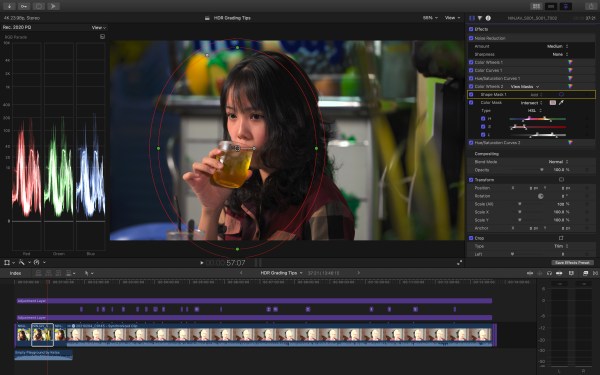
My longest HDR video to date, it took Compressor a ridiculous 4-1/2 hours to create the HEVC 10-bit file and an additional 24 hours for YouTube to finish processing the HD version! I’ve received many requests to do an HDR grading tutorial on YouTube, but a screen recording with QuickTime would be in SDR with... Continue Reading →
My Most Successful HDR Video Yet
This is perhaps the first of my videos that really begins to use light in a way that takes advantage of HDR rather than being a video that just happens to be mastered in HDR. Not that there aren't numerous benefits to uploading even videos with limited dynamic range as HDR, including greater perceived sharpness,... Continue Reading →
At Last! LG 32EP950 OLED Monitor
At the moment, with just two manufacturers currently occupying the consumer HDR monitor space - Asus, with their ProArt series and Apple’s Pro Display XDR - LG looks poised to leapfrog them both with their newly announced 32” OLED display. Both the Pro Display XDR and ProArt series use mini LED technology, which suffers from... Continue Reading →
Tran
Not that anyone would notice, but this is the first video shot with the Sigma FE 85mm f/1.4 DG DN where I bothered to turn on in-camera distortion compensation. 🙂 https://youtu.be/XKq2prHAvVg
The iPhone 12 Pro Max as a Consumer Reference Monitor
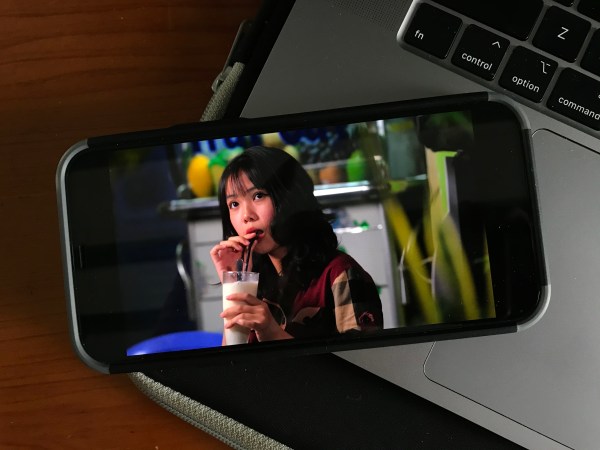
Part I: The iPhone 12 Pro Max as a Consumer Reference Monitor Part II: iPhone 12 Pro as a Consumer Reference Display (cont’d) Part III: iOS Devices as Client Reference Monitors Part IV: Consumer Displays: When Your Client is David Fincher It’s industry practice for outfits like Technicolor to use OLED televisions as consumer reference displays when grading... Continue Reading →
Why Are HDR Shows So Dark?
In this video, we discuss the experience of watching HDR content on smartphones and try to answer the question ‘why are HDR shows so dark?’ https://youtu.be/GJY22Y67do4
a7s III HDR10 Grading Breakdown
Grading tools in Final Cut Pro may be seriously limited when compared to DaVinci Resolve but that doesn't mean there's not a whole lot that can still be done to improve the look of your videos. Up till now, I haven't done any grading of my HDR videos at all (apart from neutralizing the green... Continue Reading →
ProRes 422 or HEVC?
In our untiring commitment to being the ultimate resource for those seeking factual information on uploading HDR videos to YouTube, we’ve added another comparison that aspires to settle the question: should you be transcoding XAVC S-I to HEVC or to ProRes 422 when uploading to YouTube? This 10-second clip took 83 seconds to finish processing... Continue Reading →
Editor Goes Through Hell So You Don’t Have to
My first long format HDR video, things didn't go so well... After playing the video for a couple of minutes, ASBL kicks in and pretty soon the picture is too dark to watch comfortably. I believe that lowering contrast to 80 and turning off Peak Brightness prevents ASBL from activating, but that defeats the whole... Continue Reading →
a7s III Slow Motion Sample Footage
This morning when I woke up I was greeted with a brainless comment on one of my YouTube videos basically saying that Sony colors suck and that the Venice is the only Sony camera with decent colors. I promptly deleted the comment, but rather than making another rant video, I thought I'd just upload a... Continue Reading →