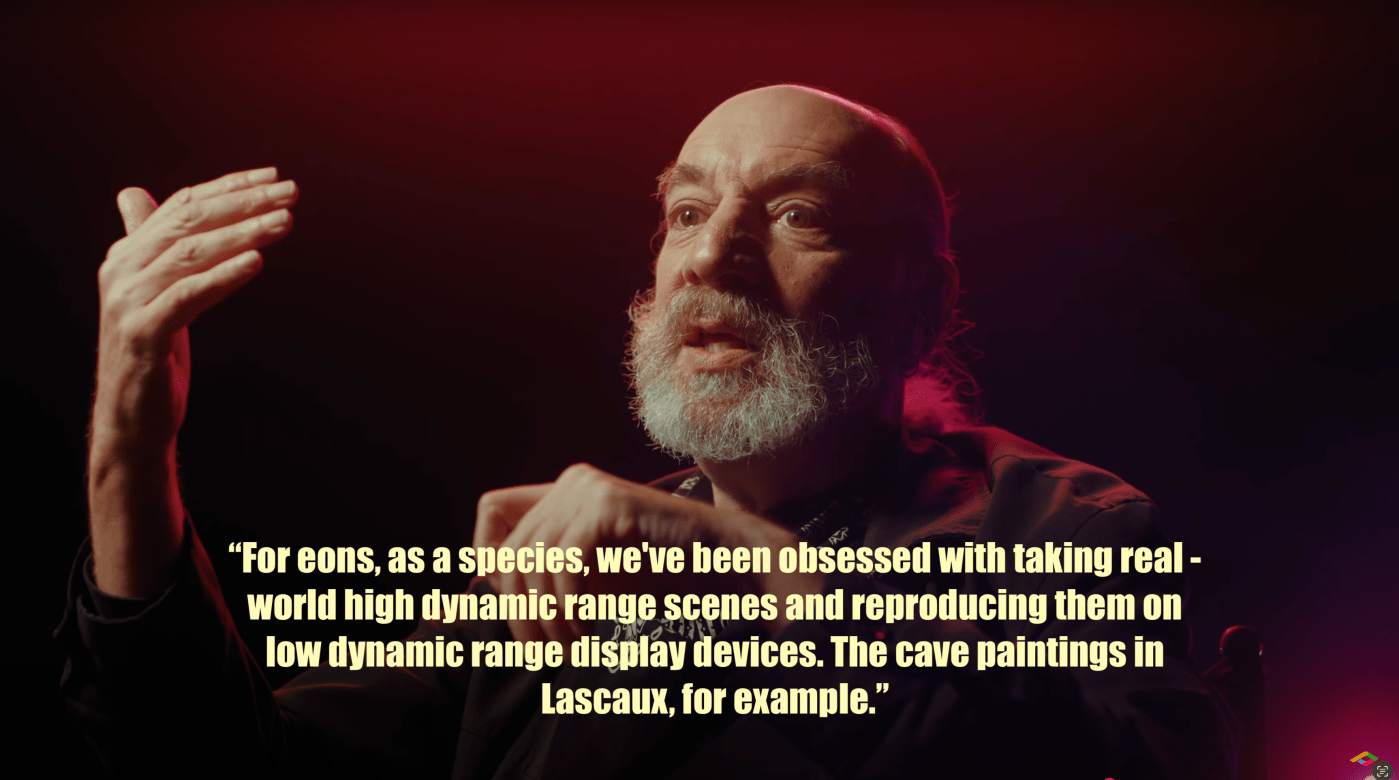
A prominent display calibration company portrays color scientist Josh Pines as a rebel challenging industry norms. But Pines’ rhetoric reveals a deeply reactionary mindset. Worse, companies like Portrait Displays platform his anti-HDR views while selling HDR tools – a paradox exposing industry-wide dissonance.
“For eons, as a species, we’ve been obsessed with taking real world high dynamic range scenes and reproducing them on low dynamic range display devices. The cave paintings in Lascaux, for example.” Josh Pines, Chief Color Scientist, Picture Shop. “A Rebel’s History of Color in Cinema,” Portrait Displays. (Sept. 2023)
Pines’ use of “obsessed” and “species” frames LDR as a biological imperative, implying that HDR breaks from deep-rooted human tradition. He weaponizes history to dismiss HDR as a gimmick. For an imaging scientist to imply humans are “hardwired” for LDR is weird, 18th century thinking.
The Rebel Facade vs. Reactionary Reality
Portrait Displays’ ‘Rebel’ branding obscures Pines’ true role. His anti-HDR stance (comparing it to Smell-O-Vision) and insistence on ‘merging’ SDR/HDR prioritize legacy systems. True rebels innovate; reactionaries police creative boundaries.
Portrait Displays’ Complicity
Despite selling HDR calibration tools (e.g., Calman software, C6 probes), Portrait Displays amplifies Pines’ anti-HDR views. Why? His prestige – as a prominent figure in the industry – lends credibility to their brand, even as his rhetoric undermines their core technology. It’s profoundly ironic for a calibration company to platform someone who opposes its core technology.
The Bigger Picture
This isn’t about one man. It’s about an industry where gatekeepers— Steve Yedlin (‘Debunking HDR’), Ed Lachman (‘HDR is marketing’), and Pines – reframe technical limits as virtues. When corporations platform them as rebels, they legitimize a dangerous narrative: that constraints define art.
HDR isn’t a spec – it’s a language
 The Daejeon Chronicles