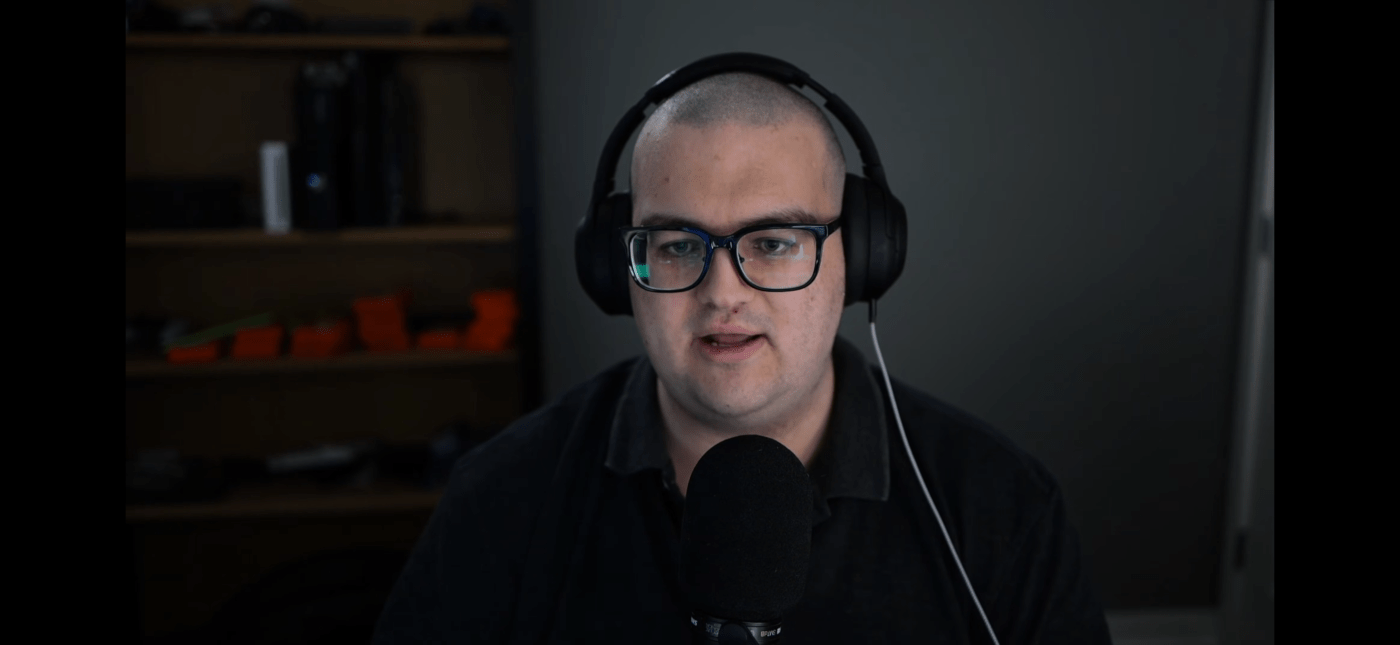

In a recent Digital Foundry episode, during a discussion of a Wccftech article profiling graphics programmer Filippo Tarpini, host Oliver Mackenzie made a staggering number of questionable, misleading, or inaccurate statements. We correct the record.
“High brightness displays can display HDR and SDR signals.”
False. Only HDR displays can properly display HDR. High-brightness SDR displays are incapable of displaying HDR.
“And there’s also this comment about Rec.709, or technically BT.1886.”
False. The article reads “Rec.709/sRGB color space”. BT.1886 is not a color space; it is a transfer function [1]. It defines neither a white point nor color primaries.
“One tension is, do you grade in SDR first or HDR first… should you create a really punchy HDR image or a more subdued one that comes closer to the SDR presentation? And a lot of colorists and artists would say, ‘I want those grades to match,’ but modern display technology kind of pushed you in the former direction? And indeed the former look is very appealing. So what do you do? I don’t think that question is settled even within major game studios that are shipping HDR titles. Right? That’s a key question.”
Workflow Consensus: While universal agreement is lacking, the emerging consensus and recommended best practice in the industry is to grade the HDR first [2].
“One of the things with creating games with HDR support is that it isn’t just an add-on feature for a game. It normally needs addressing very early on in the process.” – Sean Cleaver, “Designing for HDR”, MCV Develop. (Mar. 2017)
Creative Intent: HDR is neither inherently “punchy” nor “subdued”. The technology does not dictate creative decisions—the creator does.
“And the other question is, who are you creating this HDR picture for? Someone with a really high-end configuration that’s perfectly calibrated or someone with a lower-end configuration that’s maybe more typical or potentially in a situation where the things might be miscalibrated.”
A. HDR is not mastered for any individual consumer device. The calibrated professional mastering monitor is the sole reference [3].
B. False dichotomy. Consumers do not necessarily have to choose between a “perfectly calibrated” high-end TV or a poorly calibrated budget model. Decent mid-range TVs with excellent factory calibration are available at relatively affordable prices [4].
“Filippo touches on some issues potentially here with the hardware formats that you might see a game displayed in a panel that’s not really capable of HDR but is marketed towards being capable of HDR and these kinds of issues. Right?”
That is precisely why expert review resources like Rtngs.com and YouTube channels like HDTVTest exist.
“Even this article I noted is formatted in SDR. Right? The article itself, the imagery in the article, they could have formatted that using HDR metadata. They could have captured in HDR. They did not…. That is like really unusual here.”
Misleading. SDR is the dominant standard for images on the web. It remains the most reliable and practical choice for widespread web compatibility at this time.
“But also, what Filippo says, I think there are a couple of points I wanted to make here. He basically says that SDR has never been standardized around display brightness. And that’s true, but also the human visual system is a relative visual system. Like when I’m looking at a phone in a dark room versus outside in the sun, I’m getting a very different experience in those phones because my eyes are adapting to light, right? The pupil opens.”
The fact that the Perceptual Quantizer (PQ) is an absolute standard is precisely what makes HDR superior for delivering high-quality, consistent visual experiences across various displays.
“With HDR, oftentimes it is an absolute brightness standard as Filippo says, but it’s also a relative brightness standard because we end up saying, ‘Okay, here’s 1,000 nits on your display, but then you end up saying, okay well, here’s HGIG, here’s dynamic tone mapping, here’s all these technologies cuz I don’t actually want 1,000 nits on my 2,000-nit display. I want 2,000 nits on my 2,000-nit display.’ So, we almost always end up back at relative brightness from absolute brightness. That’s a common misconception here.”
First of all, calibration is supposed to happen in-game or at console-level, since, unlike movies, games lack metadata. By setting the peak brightness and black level sliders, the user defines the absolute luminance range the game will output for their specific display.
The in-game brightness adjustment does not alter the absolute nature of the Perceptual Quantizer (PQ) curve or control the display’s hardware-level EOTF application.
Second, the statement confuses radically different technologies. The HDR Gaming Interest Group (HGiG) guidelines fundamentally operate on the principle that PQ (SMPTE ST 2084) is an absolute, display-referred system. In practice, this means a TV should track the PQ curve accurately up until panel peak, at which point it will ‘hard clip’ [5].
DTM, on the other hand, analyzes each frame of the incoming PQ signal in real-time and dynamically adjusts the luminance and color. This process does alter the absolute nature of the original, fixed PQ curve.
“It’s just basically a way of addressing super high brightness displays.”
False. HDR is designed to expand both luminance range and contrast, not just achieve higher peak brightness.
For the host of a premier gaming channel to be so mistaken about a topic they pretend to be an authority on and for their co-hosts not to intercede calls the entire channel’s claimed expertise into question.
- ITU-R BT.1886
- Netflix Partner Help Center, “Dolby Vision Mastering Guidelines”
- EBU Tech 3320, “User Requirements for Video Monitors in Television Production”. Clause 2.1 Definition of a Grade 1 HDR Monitor. Geneva. (Sept. 2019)
- Rtngs .com, “LG B5 OLED TV Review”. (July 2025)
- Vincent Teoh, “Here’s Why HDR Games Look Better if Your TV supports HGiG/Tone-Mapping Off”. HDTVTest. (Oct. 2023)
Sources
DF Direct Weekly #243. Digital Foundry Direct YouTube Channel. (Dec. 2025)
Alessio Palumbo, “The HDR Gaming Interview – Veteran Developer Explains Its Sad State and How He’s Coming to Its Rescue”, Wccftech. (Dec. 2, 2025)
Sean Cleaver, “Designing for HDR”, MCV Develop. (Mar. 2017)
 The Daejeon Chronicles